Barack Obama's Teleprompter's Blog

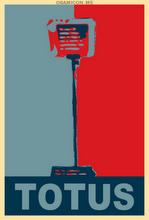
It's evident that Obama is incapable of speaking without the teleprompter. So far without the teleprompter he has made an ass out of himself. His latest gaff, exemplified on the Tonight Show, with Jay Leno. While on the Tonight Show Obama likened his bowling skills to that of the Special Olympics.
http://abcnews.go.com/Politics/story?id=7129997&page=1
"I bowled a 129," he told Leno.
"That's very good, Mr. President," Leno said sarcastically.
But then came the foot-in-mouth moment: "It's like the Special Olympics or something," the president said.
If only the teleprompter were there. Now the teleprompter has a chance to voice it's own opinion!
This is brilliant, I love it!
http://baracksteleprompter.blogspot.com/
Note: You DO NOT have to register to leave a comment.
AIG is Obama's worst nightmare! The teleprompter didn't tell me that Timothy Geithner crafted some of the AIG bailout deal!
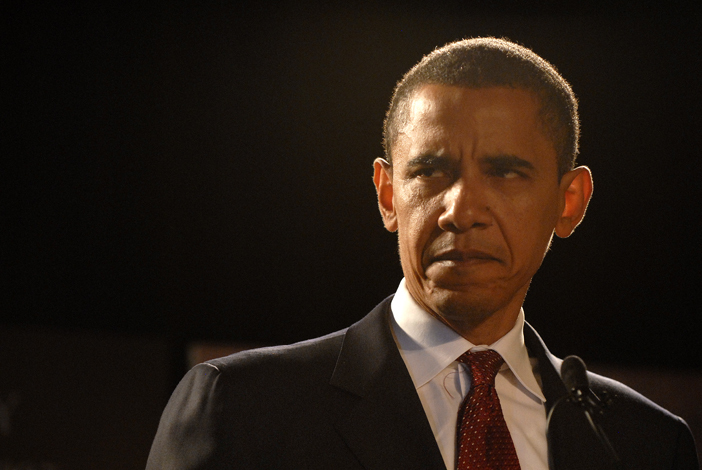
Most people didn't know that Timothy Geithner crafted some of the legislation dealing with the AIG bailout. Remember Timothy Geithner was the president of the Federal Reserve Bank of New York, from 2003-2009. Geithner is now the current United States Secretary of the Treasury.
http://www.federalreserve.gov/newsevents/press/other/20080916a.htm
Federal Reserve Press Release
Release Date: September 16, 2008
For release at 9:00 p.m. EDTThe Federal Reserve Board on Tuesday, with the full support of the Treasury Department, authorized the Federal Reserve Bank of New York to lend up to $85 billion to the American International Group (AIG) under section 13(3) of the Federal Reserve Act. The secured loan has terms and conditions designed to protect the interests of the U.S. government and taxpayers.
The Board determined that, in current circumstances, a disorderly failure of AIG could add to already significant levels of financial market fragility and lead to substantially higher borrowing costs, reduced household wealth, and materially weaker economic performance.
The purpose of this liquidity facility is to assist AIG in meeting its obligations as they come due. This loan will facilitate a process under which AIG will sell certain of its businesses in an orderly manner, with the least possible disruption to the overall economy.
Why is Geithner attacking AIG along with members of Congress? I guess they didn't know where the money was going either!
http://www.latimes.com/news/nationworld/washingtondc/la-fi-aig-taxes18-2009mar18,0,3110160.story
March 17, 2009
"Two weeks ago, the president's spokesman said that they were confident that they knew how every dime was being spent at AIG," House Minority Leader Rep. John Boehner (R- Ohio) said this morning.
"Well clearly, they didn't know what they were talking about," he said. "I think this is outrageous, and I think the American people are rightly outraged that their tax money is going to pay bonuses to the very people that got this company in trouble."
At least one Republican is saying something.
UPDATE:
Apparently the administration did know about the bonuses long ahead of time. This comes after many members of Congress had attempted to "run" from this.
Here is a link to the AIG 2008 Employee Retention Plan:
http://news.findlaw.com/hdocs/docs/aig/bonus-retention-plan2008.html
Note: You DO NOT have to register to leave a comment.
AIG Bonuses, why is this the government's business?

http://www.cnn.com/2009/POLITICS/03/16/AIG.bonuses/index.html
Obama on AIG:
"This is a corporation that finds itself in financial distress due to recklessness and greed." Obama told politicians and reporters in the Roosevelt Room of the White House, where he and Treasury Secretary Tim Geithner were unveiling a package to aid the nation's small businesses.
"Under these circumstances, it's hard to understand how derivative traders at AIG warranted any bonuses, much less $165 million in extra pay. I mean, how do they justify this outrage to the taxpayers who are keeping the company afloat?"
"All across the country, there are people who are working hard and meeting their responsibilities every single day, without the benefit of government bailouts or multimillion-dollar bonuses. You've got a bunch of small-business people here who are struggling just to keep their credit line open."
"And all they ask is that everyone, from Main Street to Wall Street to Washington, play by the same rules. That is an ethic that we have to demand."
How is what AIG doing any different than the members of congress voting themselves a pay increase in the Omnibus Bill?
After all the Congressional oversight committee for Fannie Mae and Freddie Mac was made up of mostly of the people who are now pointing the finger at the private sector.
What happened when the Republicans tried to pass legislation to create a new oversight committee for Fannie and Freddie? Remember these same people who are crying now were warned by many Republican members of Congress, and The Chairman of the Federal Reserve.
2005:
Congressmen Barney Frank(D-MA), Now chairmen of the house financial services committee:
"...The more people exaggerate, in my judgment, the threat of safety and soundness. The more people conjure up the possibility of serious financial losses to the treasury - which I do not see - I think we see entities that are fundamentally sound financially, and withstand some of the disaster scenarios. And even if there were a problem the federal government doesn't bail them out. But the more pressure there is there - then the less I think we see in terms of affordable housing.
Senator Charles Schumer(D-NY), Senate Banking Committee Hearing 2005:
"...I think Fannie and Freddie over the years have done a incredibly good job and are an intrinsic part of making America the best-housed people in the world... if you look over the last 20 or whatever years, they've done a very, very good job."
Greenspan has this to say, after Fannie and Freddie leaders admit major accounting errors. 02/17/2005:
"...Enabling these institutions to increase in size- and they will once the crisis in government passes - we are placing the total financial system of the future at a substantial risk".
The Chairman of the Federal Reserve warned these same people in 2005 that a disaster was in the making!
So who is it that is getting rewarded for failure? AIG had already entered these contracts long before the bailout money was awarded. AIG is simply trying to avoid a series of lawsuits.
Why do the members of the private sector get scrutinized for their actions, but the members of Congress get a free pass? What is the message here? corporations are evil, but government is good? Why do people automatically think that members of government always have the people's best interest at heart? I think it's clear here that the opposite is true. This is a deliberate effort to demonize the private sector, and focus attention away from the - just signed - Omnibus Bill with 8,500 earmarks.
Note: You DO NOT have to register to leave a comment.
Obama finally gets CALLED OUT. Sen. Charles Grassley of Iowa
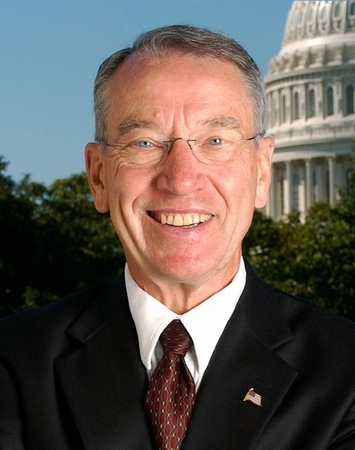
In the past week, Obama's proposals for major health care, energy and education changes amid a recession faced skepticism from both Democrats and Republicans on Capitol Hill. North Dakota Sen. Kent Conrad, the Democratic chairman of the Budget Committee, called the track of future deficits "unsustainable."
Obama is projecting a federal deficit of $1.75 trillion this year, by far the largest in history, but says he can get it down to $533 billion by 2013.
On Saturday, Grassley criticized Obama's proposals for tax increases as failing "to connect all the dots." The senator said the major tax increases will only force people to drop out of the work force, reducing tax revenue to pay down the deficit.
"There's evidence that the president and his people understand this, even if their budget doesn't show it," Grassley said. "They say they don't want to raise taxes until 2011 because the economy is too weak. ... Well, if the president admits that tax increases hurt the economy, that will be true in two years as it is true today."
Why has the media been sleeping on this? I've blogging about this for some time now. I don't understand why people think it's a good idea to weaken our own economy. Why would our own people want this?
Is it the fact is that most people don't know what's going on; or even worse don't care.
Note: You DO NOT have to register to leave a comment.
Global economic lessons; for those who missed the wolf metaphor at the beginning of "300"
There are many things going on in the world today that are simply not making front page news. Does this mean that they are any less important?
Chinese Premier Wen Jiabao on Friday urged the US to take measures to guarantee its “good credit”, expressing concern about the “safety” of his country’s huge holdings of US government debt.
Mr Wen’s shot at the US’s deteriorating fiscal position – on the eve of this weekend’s G20 finance ministers’ meeting – was paired with a promise to increase China’s public spending this year to boost its economy if needed.
The Chinese government is the largest holder of US public debt and Chinese officials have shown increasing signs of concern that the sharp increase in US government spending will lead eventually to inflation and a collapse in the dollar.
About 70 per cent of China’s near-$2,000bn foreign exchange reserves are believed to be in US dollar assets.
“We have lent a huge amount of money to the United States,” Mr Wen told the annual press conference that marks the close of the National People’s Congress, China’s parliament.
“Of course we are concerned about the safety of our assets. To be honest, I am a little bit worried. I request the US to maintain its good credit, to honor its promises and to guarantee the safety of China’s assets.”
So the Chinese are concerned now that the United States might not be able to "make good" on it's debt. This does raise some concerns; considering that the Chinese would take this stance. Does it mean, perhaps, that the Chinese know something that our "economists" don't?
Larry Summers, US President Barack Obama’s senior economic adviser, responded by trying to quell fears over the burgeoning mountain of US debt, saying that boosting the economy would help reduce debt in the future.
“If you don’t prime the pump . . . it’s much more costly to do it later,” he said in response to a question about Mr Wen’s comments.
The US was committed to long-term fiscal stability, he said, but it was more responsible to US debt holders to ensure that the economy recovered rapidly from recession.
So we are telling the Chinese that we are going to honor our debt by borrowing more money from them? I think there is "fuzzy logic" at play here, and I'm going to point it out.
http://www.ft.com/cms/s/0/6fb02cf4-0c4b-11de-b87d-0000779fd2ac.html?nclick_check=1
Widely seen as being among the most pro-market voices in the White House, having been Bill Clinton's last Treasury secretary in the 1990s, Mr Summers said that the view on whether the market was inherently self-stabilizing had been "dealt a fatal blow".
He also urged world leaders to pump more public money into the economy in a coordinated effort to boost demand and lift the world out of recession.
The urgent need for a short-term increase in spending by governments temporarily overrode the longer-term goal of tackling the global imbalances many economists believe caused the financial crisis, he said.
His comments, ahead of next month's crunch Group of 20 summit in London, make clear that the US administration wants industrialized nations to share responsibility for engineering a global demand-led recovery and does not believe this burden should fall on China alone.
"The old global imbalances agenda was more demand in China, less demand in America. Nobody thinks that is the right agenda now," said Mr Summers. "There's no place that should be reducing its contribution to global demand right now. It is really the universal demand agenda."
While the US and other western nations should return to living within their means in the medium term, everyone should raise spending sharply now. "The right macroeconomic focus for the G20 is on global demand and the world needs more global demand," said Mr Summers.
At a time when the Republican critique of Washington's aggressive response to the crisis is growing more trenchant, Mr Summers made an unapologetic case for state intervention.
"This notion that the economy is self-stabilizing is usually right but it is wrong a few times a century. And this is one of those times . . . there's a need for extraordinary public action at those times and that's a clear lesson of today." The suggestion that the financial crisis had been caused by too much government intervention, as many in the Republican party argue, was simply wrong, he said.
There are a few things at play here that, for the most part, are over looked. The idea that the a government can "create demand" is based on an economic model theorized by John Maynard Keynes. I covered this theory in a comment to another viewer.
Keynes argued that the solution to depression was to stimulate the economy ("inducement to invest") through some combination of two approaches: a reduction in interest rates, and government investment in infrastructure. Investment by government injects income, which results in more spending in the general economy, which in turn stimulates more production and investment involving still more income and spending and so forth. The initial stimulation starts a cascade of events, whose total increase in economic activity is a multiple of the original investment.
A central conclusion of Keynesian economics is that in some situations, no strong automatic mechanism moves output and employment towards full employment levels. This conclusion conflicts with economic approaches that assume a general tendency towards an equilibrium. In the 'neoclassical synthesis', which combines Keynesian macro concepts with a micro foundation, the conditions of general equilibrium allow for price adjustment to achieve this goal.
The New classical macroeconomics movement, which began in the late 1960s and early 1970s, criticized Keynesian theories, while New Keynesian economics have sought to base Keynes's idea on more rigorous theoretical foundations.
More broadly, Keynes saw his as a general theory, in which utilization of resources could be high or low, whereas previous economics focused on the particular case of full utilization. However, after reading Hayek's criticism, The Road to Serfdom, he agreed that "the theory of aggregated production, which is the point of the [General Theory], nevertheless can be much easier adapted to the conditions of a totalitarian state [eines totalen Staates] than the theory of production and distribution of a given production put forth under conditions of free competition and a large degree of laissez-faire."
The theory that Larry Summers is basing his assumptions on; requires massive government control of resources and the market as a whole. This is why he, "wants industrialized nations to share responsibility for engineering a global demand-led recovery". The model will not work correctly within a free market global economy, as admitted by Keynes himself. Also the Keynes' theory does not account for a large deficit; nor in theory was the government investment made with borrowed money.
The other problem is that we are spending money at a rate that cannot be maintained. There is no long term approach here. When the bridges are built, roads repaired, and the buildings are "eco-friendly", then what? Where did all of the jobs go? The government can only create short term economic demand. Just as George W. Bush was criticized by John Kerry in the "War On Terror" for not, "Having a plan to win the peace". There is no long term plan to prosperity here.
The health care industry in the United State makes up 17% of GDP. http://www.nchc.org/facts/cost.shtml That's nearly one quarter of the the GDP that is going to be taken away, when the government begins to offer health insurance. The GDP will drop by a large percentage because the money the government will spend on health care is really just redistributed wealth. The government cannot create wealth.No new economic growth will spawn from government subsidized health care.
The current U.S. government economic stance is causing fear in global markets. The Chinese know that our current path is not sustainable. Chinese investments in the U.S. economy are based on potential returns, not IOU's.
Note: You DO NOT have to register to leave a comment.
 XML Feeds