Bernard Madoff, going to jail, but where did the money go?


http://www.bloomberg.com/apps/news?pid=20601087&sid=aewkjJesFa2U&refer=worldwide
In a slow news day what is one to do?
Where do you think the money went?
Note: You DO NOT have to register to leave a comment.
Remarks of President Barack Obama Earmark Reform The White House March 11, 2009
Obama is requesting that Senators and House members post earmarks on their websites for scrutiny before they are passed into law. I don't see how this would have helped with the last spending bill? If Congress is going to ram legislation through in just days, how is this going to help?
http://www.c-span.org/pdf/obama_031109.pdf
Remarks of President Barack Obama
Earmark Reform
The White House
March 11, 2009I ran for President pledging to change the way business is done in Washington and build a government that works for the people by opening it up to the people. That means restoring responsibility, transparency, and accountability to the actions government takes. And working with the Congress over my first fifty days in office, we’ve made important progress toward that end.
Working together, we passed an American Recovery and Reinvestment Act that is already putting people back to work doing the work Americans need done. And we did it without the customary Congressional earmarks – the practice by which individual legislators insert projects of their choosing. We are implementing the Recovery Act with an unprecedented level of aggressive oversight and transparency, including a website – Recovery.gov – that allows every American to see how their tax dollars are spent and report on cases where the system is breaking down.
I signed a directive that dramatically reforms our broken system of government contracting, reining in waste, abuse and inefficiency; saving the American taxpayer up to $40 billion each year in the process.
And I have laid out plans for a budget that begins to restore fiscal discipline so we can bring down the $1.3 trillion budget deficit we inherited and pave the way for our long-term prosperity. For the first time in many years, we’ve produced an honest budget that makes the hard choices required to cut our deficit in half by the end of my first term in office.
Yesterday, Congress sent me the final part of last year’s budget; a piece of legislation that rolls nine bills required to keep the government running into one – a piece of legislation that addresses the immediate concerns of the American people by making needed investments in line with our urgent national priorities.
That is what nearly 99 percent of this legislation does – the nearly 99 percent you probably haven’t heard much about.
What you likely have heard about is that this bill does include earmarks. Now, let me be clear: Done right, earmarks give legislators the opportunity to direct federal money to worthy projects that benefit people in their district, and that’s why I have opposed their outright elimination. I also find it ironic that some of those who railed the loudest against this bill because of earmarks actually inserted earmarks of their own – and will tout them in their own states and districts.
But the fact is that on occasion, earmarks have been used as a vehicle for waste, fraud, and abuse. Projects have been inserted at the eleventh hour, without review, and sometimes without merit, in order to satisfy the political or personal agendas of a given legislator, rather than the public interest. This practice hit its peak in the middle of this decade, when the number of earmarks had ballooned to more than 16,000, and played a part in a series of corruption cases.
In 2007, the new Democratic leadership in Congress began to address these abuses with a series of reforms I was proud to have helped write. We eliminated anonymous earmarks and created new measures of transparency in the process, so Americans can better follow how their tax dollars are being spent. These measures were combined with the most sweeping ethics reforms since Watergate. We banned gifts and meals and made sure that lobbyists have to disclose who they’re raising campaign money from, and who in Congress they send it to.
We have made progress. But we must do more.
I am signing an imperfect omnibus bill because it is necessary for the ongoing functions of government. But I also view this as a departure point for more far-reaching change.
In my discussions with Congress, we have talked about the need for further reforms to ensure that the budget process inspires trust and confidence, not cynicism. So I believe as we move forward, we can come together around principles that prevent the abuse of earmarks.
These principles begin with a simple concept: earmarks must have a legitimate and worthy public purpose. Earmarks that members do seek must be aired on those members’ websites in advance, so the public and the press can examine them and judge their merit for themselves. And each earmark must be open to scrutiny at public hearings, where members will have to justify their expense to the taxpayer.
Next, any earmark for a for-profit private company should be subject to the same competitive bidding requirements as other federal contracts. The awarding of earmarks to private companies is the single most corrupting element of this practice, as witnessed by some of the indictments and convictions we have seen. Private companies differ from the public entities that Americans rely on every day – schools, police stations, fire departments – and if they are seeking taxpayer dollars, then they should be evaluated with a higher level of scrutiny.
Furthermore, it should go without saying that an earmark must never, ever be traded for political favors.
And finally, if my administration evaluates an earmark and determines that it has no legitimate public purpose, we will seek to eliminate it, and we will work with Congress to do so.
I know there are members in both houses with good ideas on this matter. Just this morning, the House released a set of recommendations for reform that hold great promise, and I congratulate them on that.
Now, I am calling on Congress to enact these reforms as the appropriations process moves forward this year. Neither I nor the American people will accept anything less.
It’s important that we get this done to ensure that the budget process works better, that taxpayers are protected, and that we save billions of dollars that we so desperately need to right our economy and address our fiscal crisis. Along with that reform, I expect future spending bills to be debated and voted on in an orderly way, and sent to my desk without delay or obstruction, so that we don’t face another massive, last-minute omnibus bill like this again.I recognize that Congress has the power of the purse, and as a former Senator, I believe that individual members of Congress understand their districts best. They should have the ability to respond to the needs of their communities. But leadership requires setting an example, and the magnitude of the economic crisis we face requires responsibility on all our parts.
The future demands that we operate in a different way than we have in the past. So let there be no doubt: this piece of legislation must mark an end to the old way of doing business, and the beginning of a new era of responsibility and accountability that the American people have every right to expect and to demand.
If we are going to solve our economic crisis; if we are going to put Americans back to work; if we are going to make the investments required to build a foundation for our future growth – then we must restore the American people’s faith that their government is working for them, and that it is on their side. That is the government I promised. That is the government I intend to lead.
Note: You DO NOT have to register to leave a comment.
Is China "testing the waters"?

Chinese Navy gets a little too close for comfort...
http://news.bbc.co.uk/2/hi/asia-pacific/7933171.stm
Five Chinese ships have manoeuvred dangerously close to an unarmed US navy surveillance vessel in the South China Sea, the US government says.
The ships "aggressively manoeuvred" around the Impeccable "in an apparent co-ordinated effort to harass the US ocean surveillance ship while it was conducting routine operations in international waters", according to the Pentagon.
Impeccable is designed specifically to detect underwater threats such as submarines for the US navy.
The US ship sprayed one Chinese vessel with water from fire hoses to try to force it away, the Pentagon said. But the Chinese crew stripped to their underwear and carried on approaching to within 25ft 8m), it added.
When the Impeccable radioed requesting a safe path to leave the area, two Chinese vessels dropped pieces of wood in its path, forcing the US ship to make an emergency stop, the Pentagon said.
The Pentagon reported three other naval incidents involving China last week:
* On Wednesday, a Chinese Bureau of Fisheries Patrol vessel used a high-intensity spotlight to illuminate the ocean surveillance ship USNS Victorious in the Yellow Sea and, the next day, a Chinese Y-12 maritime surveillance aircraft conducted 12 fly-bys of Victorious.
* On Thursday, a Chinese frigate approached Impeccable without warning and crossed its bow at a close range of approximately 100m (yards), after which a Y-12 aircraft conducted 11 fly-bys. The frigate later crossed the US ship's bow again.
* On Saturday, a Chinese intelligence collection ship challenged Impeccable over bridge-to-bridge radio, calling her operations illegal and directing her to leave the area or "suffer the consequences".
This is not a good thing. Some think that the Chinese might just be pushing a little.
At issue in Sunday's incident is the manner in which the US navy says the Chinese vessels went beyond the usual boundaries in shadowing and harassing the Impeccable, the BBC's Kevin Connolly notes.
This may be an example of China testing the mettle of a new US administration, just as it did when it impounded a US reconnaissance aircraft immediately after George W Bush took office, he says.
It held the crew of the plane, which was in collision with a Chinese fighter jet, for 11 days, causing a serious diplomatic row between the two countries.
While relations between Beijing and Washington are complex, any sense of military competitiveness is dwarfed by America's need for China to continue buying US debt to fund its huge and growing deficit, our correspondent adds.
This is one example of how running a large deficit can be a dangerous thing. Making the deficit larger at this time is not wise. This shows how unfriendly countries can, and will, take advantage of the situation.
Note: You DO NOT have to register to leave a comment.
Can Obama say NO to the Omnibus Bill ?
Most people don’t even know what this Omnibus Bill is. Well if you have followed the news at all the Omnibus Bill is the one with 9,000 earmarks in it! That’s a lot of pork. Now not all of the pork comes from one side of the isle. Both sides have loaded this bill with pork projects, to the tone of about 60% Democrat and 40% Republican.
We can’t realistically expect Congress to stop the bill. The Republicans in the Senate have managed to stall the bill, which means it will be an issue over the weekend. This is a good thing, because the more people see this mess the more they understand what a bad idea it is.
The question is, will Obama Veto the Omnibus Bill? Considering he ran on a platform of transparent politics, and stopping wasteful spending, it might be a good idea. But does Obama have the “will” to stand up to congress and say NO to an insane spending bill in the middle of an economic downturn. My guess is he does not. He has already started to backpedal again. Obama was mentioning that these pork projects were added in last year, before he was in office. Doesn’t matter, if you are going to stop the pork you have to take a stand, you can’t just let this one ride… If Obama turns his back on the American People this time, he will prove that he is just another politician.
It is also a good thing to note that Obama has had his name stricken from the record in the Bill. Some of the pork had his name on it. Yes the pork is still there, only Obama’s name is not. There is some debate over whether the measure could be called "pork", but Obama ended that debate when he pushed to have his name removed.
http://www.cqpolitics.com/wmspage.cfm?parm1=5&docID=news-000003062314
Congress will scrub President Obama’s name from a list of earmark cosponsors in the $410 billion omnibus spending bill.
The reason: Whether Obama cosponsored the earmark depends on what the definition of earmark is and when an earmark becomes an earmark, according to the Senate Appropriations Committee.
The provision itself is still considered an earmark, and it’s staying in the bill (HR 1105) — but it’s losing the Obama brand.
As of Thursday, Obama’s name appeared along with three dozen other senators as a cosponsor of a $7.7 million line item for vocational training at two schools run by American Indian groups in New Mexico and North Dakota.
The White House objected to the characterization of the provision as an earmark — a sensitive topic, given that Obama said he didn’t request any earmarks in 2008.
Subsequently, Senate Appropriations Committee spokesman Rob Blumenthal said Obama’s name would be removed from future versions of the congressional report identifying earmarks and their sponsors. Other senators listed with him as cosponsors will be judged on a case-by-case basis.
Note: You DO NOT have to register to leave a comment.
"Cap and Trade" your life away...
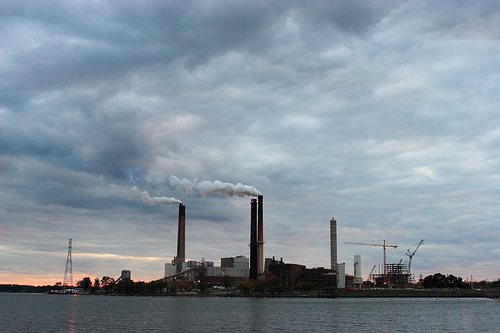
Cap and Trade is designed to offset the evil carbon emissions. There are a few things about Cap and Trade that just don't click.
http://www.washingtonpost.com/wp-dyn/content/article/2007/04/08/AR2007040800758_pf.html
As U.S. lawmakers work on the details of their greenhouse-gas legislation, they are looking carefully at Europe's experience. Five Senate proposals all use the same basic approach, known as "cap and trade," that Europe has used for the past two years. But what the snappy name "cap and trade" means is that the market will put a price on something that's always been free: the right of a factory to emit carbon gases. That could affect the cost of everything from windowpanes to airline tickets to electricity.
I have to correct Steven Mufson, the author of the article I quoted. The market IS NOT going to put a price on something that has always been free; the government WILL.
I thought that this was going to save the planet. But after all, who is going to say, "we can't afford to save the planet". Well perhaps that's what people should be saying. Let's assume for a minute that "Man Made Global Warming" is a real issue, and that reducing carbon emissions will fix the problem. Never mind that 10 years ago it was all about carbon monoxide...
Consider the plight of Kollo Holding's factory in the Netherlands, which makes silicon carbide, a material used as an industrial abrasive and lining for high-temperature furnaces and kilns. Its managers like to think of their plant as an ecological standout: They use waste gases to generate energy and have installed the latest pollution-control equipment.
But Europe's program has driven electricity prices so high that the facility routinely shuts down for part of the day to save money on power. Although demand for its products is strong, the plant has laid off 40 of its 130 employees and trimmed production. Two customers have turned to cheaper imports from China, which is not covered by Europe's costly regulations.
"It's crazy," said Kusters, the plant director, as he stood among steaming black mounds of petroleum coke and sand in northern Holland. "We not only have the most energy-efficient plant in the world but also the most environmentally friendly."
Of all the effects of the new rules, the rise in the price of power has aroused the most outrage. Much of the anger of consumers and industries has been aimed at the continent's utility companies. Like other firms, the utilities were given slightly fewer allowances than they needed. But instead of charging customers for the cost of buying allowances to cover the shortfall, utilities in much of Europe charged customers for 100 percent of the tradable allowances they were given -- even though the government handed them out free. Electricity rates soared.
The chief executive of one utility, Vattenfall, which owns a coal plant that is one of the continent's biggest carbon emitters, defended the decision. Lars G. Josefsson, who is also an adviser to German Chancellor Angela Merkel, said higher electricity prices are "the intent of the whole exercise. . . . If there were no effects, why should you have a cap-and-trade system?"
Germany boasts that it has cut emissions to 18.4 percent below 1990 levels, the benchmark used in the Kyoto Protocol and in Europe. But nearly half the reduction was because of sagging industrial output in the former East Germany after reunification. For the 2008-2012 period, E.U. officials sliced 5 percent off Germany's emissions proposal.
The system is designed to tax energy usage to encourage less energy use. But as the article states, there was no bonus for being efficient in the government's eyes. Why then would this encourage anyone to update their systems?
Look at it this way. The system will be enacted retroactively, the power plants are already built and running. Some plants are going to be more efficient than others. The newer more efficient plants are in the green, so to speak, because they are newer. The older plants are not going to fair as well on the carbon scale. So let's increase taxes on the businesses we just told to upgrade! How is that going to encourage anything. The power companies that have to offset their emissions are going to be at an immediate disadvantage, because they are going to loose money instantly.
If the community relying on the, now higher taxed companies, can support the price increase; then that will be the end of it. Because after all, how many power companies are "in competition"? This is absurd. It's not like a car where you can pick a different one if you like. This just passes the cost to the end user, who has no direct control over what goes on. What are you going to do, not pay your power bill in protest?
If the government is really worried about the environment, then why don't they offer tax reductions NOW to companies which upgrade their systems. Why impose a new tax, then offer incentives to decrease it, especially when the economy is in a downturn.
Obama to The San Francisco Chronicle last year [2008]:
"So if somebody wants to build a coal-powered plant, they can; it’s just that it will bankrupt them because they’re going to be charged a huge sum for all that greenhouse gas that’s being emitted."
This can't be misunderstood. Obama is saying outright that they want to destroy part of the energy sector. Not only that, they want to destroy part of the energy sector -- before there is an alternative. This is not wise.
Please leave a comment, like it or hate it, I'm looking for conversation... You DO NOT need to register to leave a comment. Email addresses are NOT used. Just make one up "someone@somehost.com"
 XML Feeds