Carbon Capture and Storage, The Carbon Pipeline From Hell
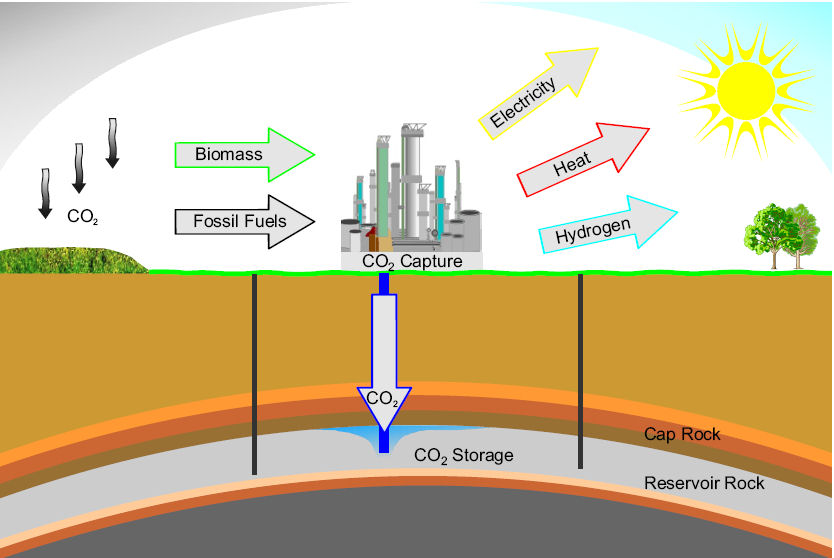
SIOUX FALLS, S.D. -- Two companies seeking to build thousands of miles of pipeline across the Midwest are promising the effort will aid rather than hinder the fight against climate change, though some environmental groups remain skeptical.
The pipelines would stretch from North Dakota to Illinois, potentially transforming the Corn Belt into one of the world’s largest corridors for a technology called carbon capture and storage.
Environmental activists and landowners have hindered other proposed pipelines in the region that pump oil, carrying carbon that was buried in the earth to engines or plants where it is burned and emitted. The new projects would essentially do the opposite by capturing carbon dioxide at ethanol refineries and transporting it to sites where it could be buried thousands of feet underground.
Despite concerns from Raffensperger and others about potential leaks from the pipelines or storage sites, the Environmental Protection Agency has concluded that storing carbon dioxide is safe as long as companies do it carefully. It is injected in a liquefied state into porous rock formations, where it eventually dissolves or hardens into minerals.
While this all sounds plausible, and more like a "possible solution" to the problem that environmentalists claim exists. There's another problem. How to capture the carbon? Elon Musk helped with that effort, by investing in a competition.
On Wednesday, Stieghorst and her Accelerated Carbonate Ion Dissolution and Dispersal (ACIDD) student team members—Isabella Arosemena, Zach Berkowitz, Jeanette Betke, Isabelle Fitzpatrick, Anwar Khan, Eden Leder, Nancy Lewis, and Drew Rich—learned their work had paid off. XPRIZE announced that ACIDD is one of five student projects awarded $100,000 to advance Musk’s goal of removing 1 billion tons of CO₂ per year from the atmosphere.
Now, Stieghorst, who is graduating in December with a degree in ecosystems science and policy, acknowledges that the hard work really begins. “I am over the moon,” she said. “I had so much confidence in the solution that I imagined this happening. But everything we did was theoretical. So, now we have to prove the idea works in the real world and at scale.”
The ACIDD proposal was based on a process developed by Rau, the chief technology officer and co-founder of Planetary Hydrogen, a carbon-capture startup. The process generates a low-carbon form of alkalinity using waste products from mining, water, and renewable electricity, and harvesting valuable byproducts such as hydrogen—a key ingredient to a decarbonized energy system. When added to the ocean, the alkalinity enhances the ocean’s uptake of CO₂ from the air while countering local ocean acidification.
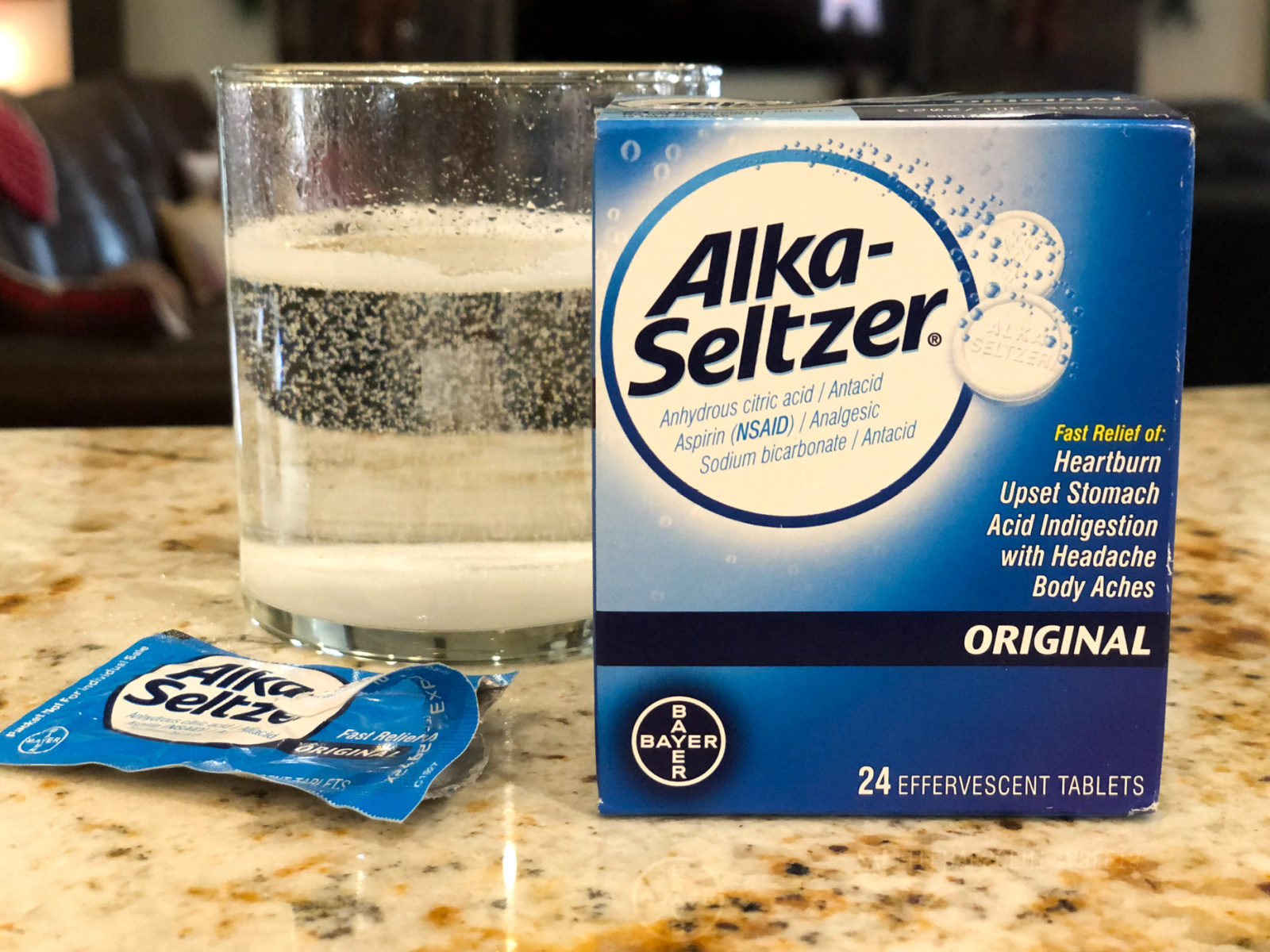
“Essentially, it’s like one big Alka Seltzer,” Stieghorst said. “When the tablet dissolves in water, it can neutralize acid. Distributing this liquid in the ocean will have a similar effect—and speed up a natural part of the geologic carbon cycle that takes thousands of years. Accelerating it to human-time scales can safely lock away our anthropogenic carbon emissions for more than 100,000 years.”
The partnership is one that Langdon, who studies the biology and ecology of corals, said could expand important research in the future. “Corals are a super delicate organism,” he said. “If we can show that we can add the Planetary Hydrogen product to the water and it doesn’t injure the health of the corals—or even enhances their health—that could go a long way in convincing people that a larger-scale experiment would be safe to try.”
This couldn't possibly go wrong right? One group wants to bury the CO2 in the ground, the other group wants to create a solid CO2 substance and dump it in the ocean.
Pumping the CO2 in the ground doesn't sound so bad, until you find out where they want to do it. The result is "transforming the Corn Belt into one of the world’s largest corridors for a technology called carbon capture and storage." Is it will destroy/repurpose farmland to capture carbon? Reducing the countries ability to produce corn doesn't sound like a good idea to me. We're immigrating people at an alarming rate, and those people have to eat. Repurposing crucial farmland to capture carbon sounds unwise.
Then, you have to consider who owns a lot of this land.
Bill Gates has never been a farmer. So why did the Land Report dub him “Farmer Bill” this year? The third richest man on the planet doesn’t have a green thumb. Nor does he put in the back-breaking labor humble people do to grow our food and who get far less praise for it. That kind of hard work isn’t what made him rich. Gates’ achievement, according to the report, is that he’s largest private owner of farmland in the US. A 2018 purchase of 14,500 acres of prime eastern Washington farmland – which is traditional Yakama territory – for $171m helped him get that title.
In total, Gates owns approximately 242,000 acres of farmland with assets totaling more than $690m. To put that into perspective, that’s nearly the size of Hong Kong and twice the acreage of the Lower Brule Sioux Tribe, where I’m an enrolled member. A white man owns more farmland than my entire Native nation!
When pressed during a book discussion on Reddit about why he’s gobbling up so much farmland, Gates claimed, “It is not connected to climate [change].” The decision, he said, came from his “investment group.” Cascade Investment, the firm making these acquisitions, is controlled by Gates. And the firm said it’s “very supportive of sustainable farming”. It also is a shareholder in the plant-based protein companies Beyond Meat and Impossible Foods as well as the farming equipment manufacturer John Deere. His firm’s largest farmland acquisition happened in 2017, when it acquired 61 farming properties from a Canadian investment firm to the tune of $500m.
Why would Gates come out and say, “It is not connected to climate change.” It tells me that Gates is concerned that people think he might be purchasing land because of climate change. This tells me that -- Gates is purchasing land for a climate change related project. I believe it's because of the carbon capture technology. Gates wants to own the land they are going to build on.
It's nearly impossible now to find any of the stories about high-speed rail in Florida. That was a similar story. The man who proposed and lobbied for the high-speed rail system owned around 80% of the land it was to be built on. Land that was otherwise very low value, could be sold for much more to the government -- for high speed rail.
I have no doubt that Gates is eyeing the exact same thing here.
Then you have the solid CO2 substance idea. Dumping the CO2 into the ocean. The logistics of this method are mind boggling. There are many facets to this. First they will have to determine how much of the CO2 slurry they can dump in a particular area, before it changes the PH of the water enough to kill wildlife. And the tides will effect the volume of water in a given area while causing a change in currents, so there's a timing aspect to it as well. Then once the ecological impact is determined, they can actually attempt to engineer a system to distribute it. Because dumping it from ships wouldn't be very "carbon neutral."
However, this is all based on the idea that carbon dioxide in the air is going to destroy our environment, is it? What evidence do we have other than the hockey stick chart, which was comprised of falsified data, and politicians who are pushing this idea.
Update 04-25-24:
Existing plants will get a little bit of a break, but new plants will have to meet the new requirements immediately.
The power plant rule marks the first time the federal government has restricted carbon dioxide emissions from existing coal-fired power plants. The rule also would force future electric plants fueled by coal or gas to control up to 90% of their carbon pollution. The new standards will avoid 1.38 billion metric tons of carbon pollution through 2047, equivalent to the annual emissions of 328 million gas cars, the EPA said, and will provide hundreds of billions of dollars in climate and health benefits, measured in fewer premature deaths, asthma cases and lost work or school days.
...
Rich Nolan, president and CEO of the National Mining Association, said that through the latest rules, “the EPA is systematically dismantling the reliability of the U.S. electric grid.’'
He accused Biden, Regan and other officials of “ignoring our energy reality and forcing the closure of well-operating coal plants that repeatedly come to the rescue during times of peak demand. The repercussions of this reckless plan will be felt across the country by all Americans.”
...
Dan Brouillette, president and CEO of of the Edison Electric Institute, which represents U.S. investor-owned electric companies, said he was “disappointed” that the EPA “did not address the concerns we raised about carbon capture and storage.’' While promising, the technology “is not yet ready for full-scale, economy-wide deployment,’' said Brouillette, who served as energy secretary in President Donald Trump’s administration.
What do you think?
Please leave a comment, like it or hate it... You DO NOT need to register to leave a comment. Email addresses are NOT used. Just make one up "someone@somehost.com"
ESG Scoring, What You Need to Know, And What It is?
 01/29/22 10:18, by OGRE, Categories: News, Background, In real life, On the web, History, Politics, U.S. Economy
Like many people, I've never heard of ESG Investment Scoring. But apparently it's a new tool used by banks to determine "credit worthiness." The strange thing is that it has little to do with the financial position of the business in question.
What Is ESG?
The term “ESG” has become more widespread in recent years as people and companies make investment decisions based not just on returns but also on alignment with their values. “ESG” stands for environmental, social and governance — ESG investing tracks impact on the wider world.
Environmental Factors
Environmental factors answer the question, “What kind of impact does a company have on the environment?” This category can include considerations like carbon emissions, vulnerability to climate change, manufacturing processes, waste disposal, packaging, renewable energy use and water use.
Social Factors
Social factors answer the question, “What kind of impact does the company have on people and communities?” This can include considerations like labor management, commitment to diversity and equity, worker care and safety, ethical sourcing, privacy, inclusionary programs and hiring practices, corporate social responsibility and product safety.
Governance Factors
Governance factors answer the question “What kind of leadership does a company have?” This category can include considerations like pay differences, diversity in leadership, leadership’s crisis responses, company ownership, business ethics and transparency.
Basically your ESG score is how well you do what the leftists tell you to do. Or, more simply, it's a "social credit system" for business banking. Similar to what they have in China. If you follow the CCP directives, you get more perks. In this case, if you follow the leftist's directives, you get a bank loan.
Again, the part that missing in all of this is the financial side. Another important question is, who decides what these directives are?
Let's look a little deeper to see what ESG entails. They are very good on the Farm Bureau website, they tell you exactly how to follow their directives.
Socially Responsible Investing: 3 Ways to Make A Difference
Responsible investing strategies can provide you the opportunity to better yourself and your community.
Socially responsible investing is an umbrella term used to describe any sort of investment that looks at environmental, social and governance (ESG) factors when making an investment decision. For example, some investors have environmental concerns, and others want to find ways to help economically under-developed countries grow. Some may be looking for ways to help feed the world, and others want to improve educational opportunities globally. All fit into the category of responsible investing, which allows investors to choose ways to make a change through their investment strategies.
There are three ESG investing strategies you can take to achieve your responsible investment goals:
1. Withdraw Support
Withdraw support from securities issuers with characteristics that don’t match your values. This is an ESG strategy many responsible investors choose first but discover it’s difficult to be universal with an investment stance from company to company. For example, if you would like to remove companies that make, use, transport or service the development of fossil fuels, you may also want to extend your list to include any company that uses fossil fuels to distribute their products from factory, to store, to your home.
2. Seek Ethical Leaders
Seek leaders among securities issuers that support ESG factors. When you support these securities, you financially support companies that are making strides to better any or all of the ESG factors. Investors also have the opportunity to advocate, as shareholders, for changes with companies that don’t meet the desired ESG factors.
3. Use Investments to Fund Change
The goal of ESG impact investing is to generate positive, measurable social and environmental impact along with a financial return on the investment.
There are pros and cons to each style, and because every investor has unique goals and investing choices, there is no set formula to follow. You may discover you fit perfectly in one of the three styles for responsible investing, or you may need to blend all three styles to best fit your portfolio and interests for achieving positive change in your community, the nation and around the world.
As you can see, ESG is more about effecting "positive change in your community, the nation and around the world." If the investment happens to actually make money, that's nice too. There is more to do with control, than there is anything to do with making money.
The most important part of this I have listed here. The goal of ESG impact investing is to generate positive, measurable social and environmental impact along with a [possible] financial return on the investment.
Look at that closely. Measurable social, and environmental impact; notice how it’s listed -- first. Does that sound like a banking strategy, or a control strategy?
In the video below Glenn Beck explains how this is a horrible idea, and it's being used to literally control world banking.
Knowing that strange and evil things are going on is one thing, but knowing how those in power are planning to implement those evil plans is critical. We all must fight to stop this movement towards one world governance! The financial sector is the single most powerful control point.
The CCP have realized financial control is the best control mechanism, and they realized this a long time ago. China was, more or less, a test ground for the whole Social Credit System strategy. It's worked there for controlling the people and business, and now those in power want to implement it here, and literally all over the world.
Please leave a comment, like it or hate it, I'm looking for conversation... You DO NOT need to register to leave a comment. Email addresses are NOT used. Just make one up "someone@somehost.com"
Dr. Lee Merritt Breaks Down COVID and Explains Its Likelihood as A Bioweapon, January 15, 2021
01/29/22 09:32, by OGRE, Categories: News, Background, In real life, On the web, History, Politics, Health Care This is one of the most informative videos I've seen as it relates to COVID-19 and the vaccine push. Considering this video is from Jan. 15, 2021, it's pretty amazing how accurate Dr. Lee Merritt is in her assumptions.
What she discusses in this video, as a hypothesis, is now fact.
What do you think?
Please leave a comment, like it or hate it, I'm looking for conversation... You DO NOT need to register to leave a comment. Email addresses are NOT used. Just make one up "someone@somehost.com"
Honda HVAC Blend Door Actuators
I had no heat in my 2008 Honda CR-v, and the driver's side of my 2010 Honda Odyssey was moving between hot and cool constantly.
There are little actuators that move the blend door(s) for heat and cool in Hondas. Back when I was a mechanic I would always try to repair them, because most of the time the grease that they use at the factory just dries out in them. They don't really wear out as you are lead to believe. They have tiny little brushed DC motors in them. The same kind of motor that makes your power mirrors work. And power mirror actuators almost never go bad.
There are only (3) gears in the actuator, and the little motor has a worm gear on it (NOTE: THE MOTOR IS DC, MARK THE MOTOR SO YOU KNOW EXACTLY WHICH WAY TO REINSTALL IT. IF YOU ROTATE THE MOTOR, IT WILL RUN IN BACKWARDS. IF THIS HAPPENS THE ACTUATOR WILL MOVE ONE WAY, WHEN INSTALLED, AND STOP). The way the system works is signal and feedback. When you move the dial to heat, cool, or somewhere in-between, it causes the actuator to move. There is feedback to the A/C control head that controls the actuator. If you put it in the middle, it's looking for a (5) volt feedback signal. So it will drive the motor in the direction it needs to until it gets the feedback voltage it's looking for.
If there is no feedback, it won't move at all. In my 2008, it wouldn't move at all. So, I removed the actuator. This is a picture of the actuator out of the 2010 Odyssey, but it's OK, because they are the same inside.
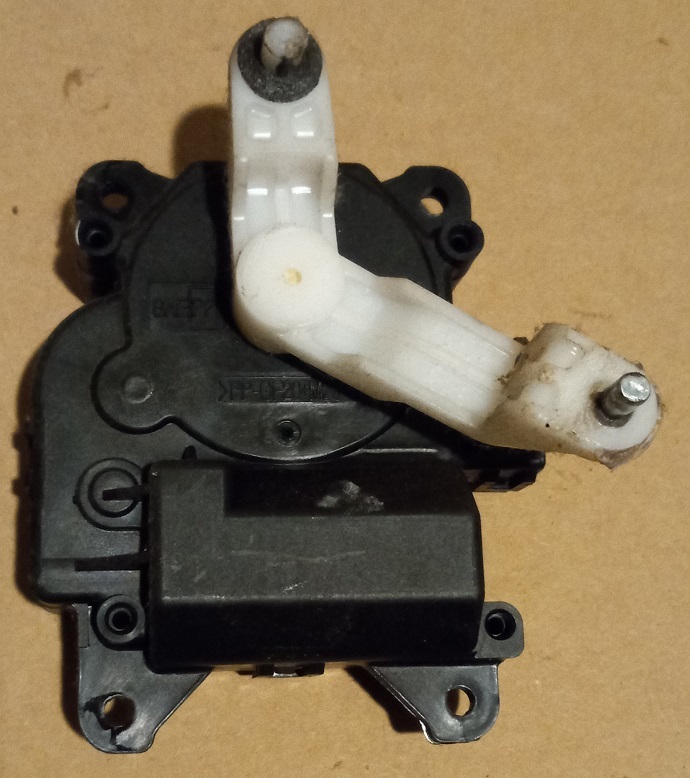
To open the actuator there are little plastic clips all the way around on the outside, and there are two on either side of the connector. These usually break when you try to open the actuator. Don't worry though, the screws that hold the actuator to the bracket also work to hold the actuator together. As long as you don't break all of them, you should be OK. Otherwise you'll have to rig it with Zip-Ties or something like that.
There is an output gear that connects to the linkage. On that gear is a slip ring made of a resistive material. These pictures I grabbed off the internet, because I didn't take pictures of mine. It's way too windy outside and the temperature is dropping, so I wanted to get both cars fixed quickly! Whoever was working on these actuators went CRAZY with the grease. I never add grease to the gears because they are plastic, and slow moving, and grease is what causes the problems in the first place.
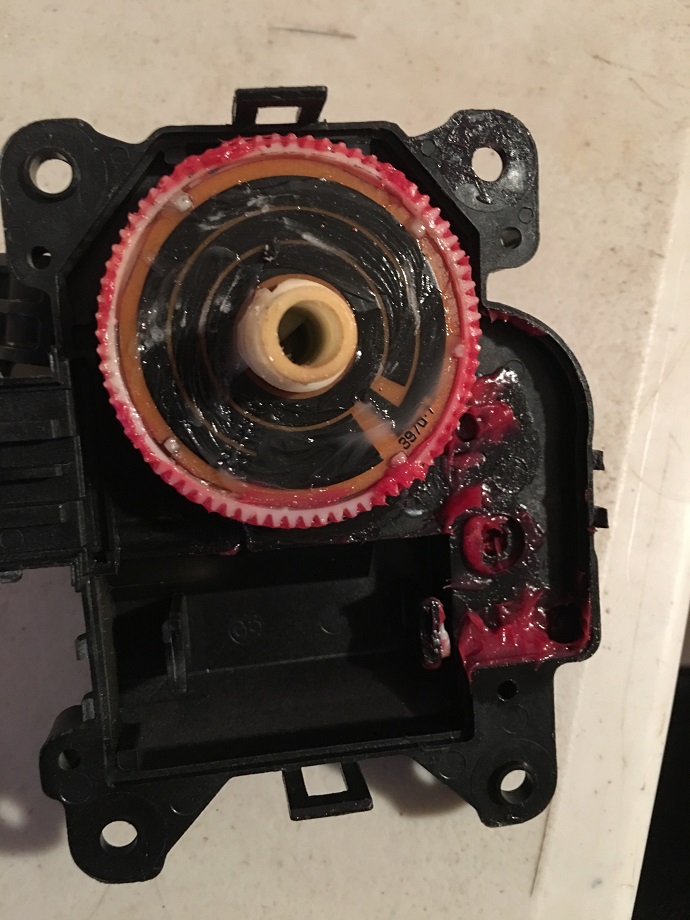
After around 10 years the grease on the slip ring starts to get dry and hard. And it keeps the little contacts from contacting the ring.
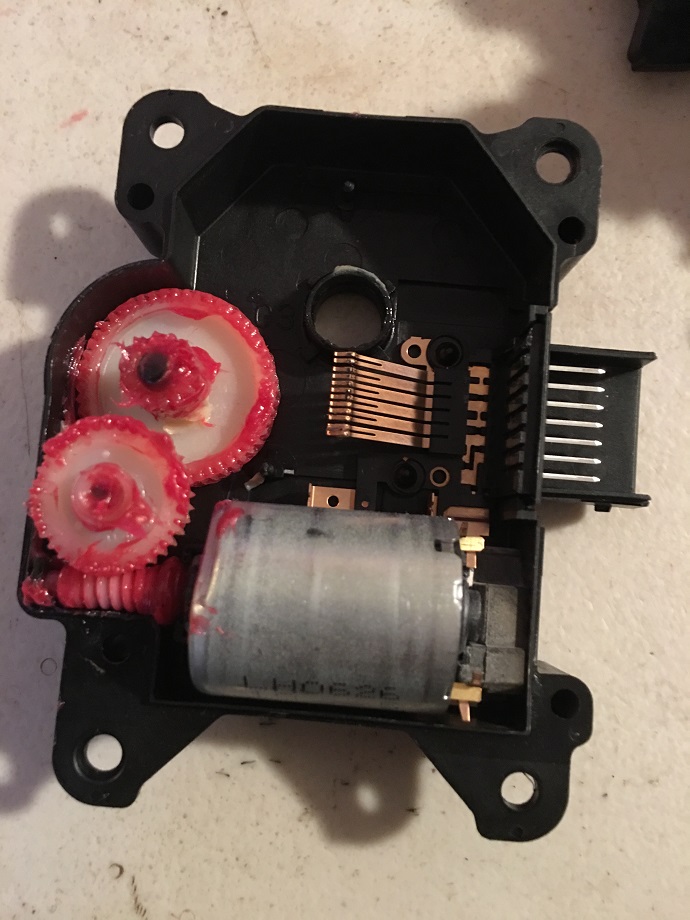
The fix is really simple. Clean all the grease off of the slip ring with a paper towel. Clean the contacts for the slip ring as well. Then bend the little contacts up a little bit more than they were to begin with, but not too far.
Then to grease the slip ring, I just use a little petroleum jelly. Some people like to use dielectric grease, but that's expensive, and not really needed because the slip ring only has around 10 volts on it anyway.
Snap it back together, and plug it in under the dash, but don't mount it! Check and make sure that it can be moved to all positions with your hot/cool dial, or by running the setpoint up and down if you have automatic A/C. Just make sure that it can move correctly.
If it works, reinstall it and test to make sure that the blend door isn't binding, and you have it installed correctly.
That's it, you just saved yourself a ton of money! These actuators cost around $150 after market, and the one for the Odyssey was listed at $190.
Also, because of the government created supply chain crisis, you could wait quite a while to get one of these parts.
I'm not sure what the labor to replace would be now, but if you went to a shop, you would probably be looking at $300 to get one replaced. Or, you can take a little time and fix it yourself.
Please leave a comment, like it or hate it, I'm looking for conversation... You DO NOT need to register to leave a comment. Email addresses are NOT used. Just make one up "someone@somehost.com"
Hey, Hey We're the Monkees
01/25/22 10:47, by OGRE, Categories: Welcome, News, Background, In real life, History, Health Care, Strange_News 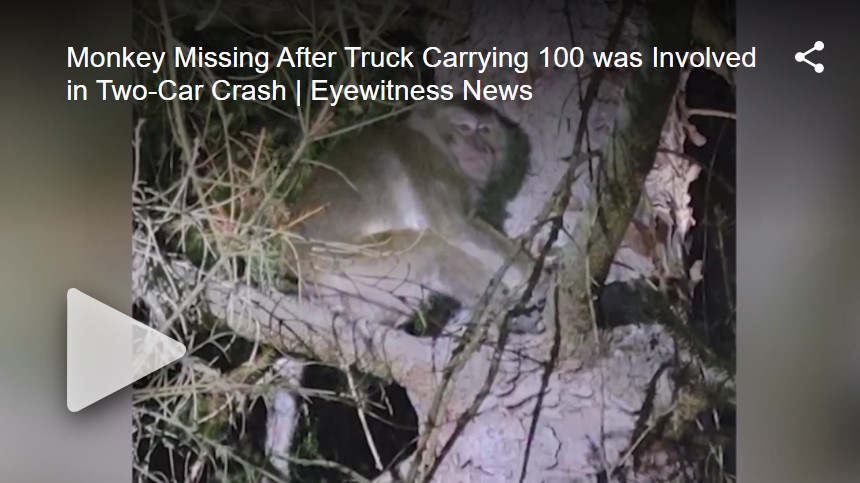
This story is astonishing considering all that is going on right now.
According to a CDC spokesperson, the monkeys were en route to a CDC-approved quarantine facility after landing Friday morning in New York. They are originally from Mauritius, a country in eastern Africa.
The crash happened around 3:30 p.m. Friday afternoon, that’s when the three monkeys got free in the Danville area.
Police say the driver who was transporting the monkeys was charged in the crash.
Originally, state police told us four monkeys were on the loose.
As of Saturday afternoon, some people were still worried.
“Little monkeys, we got bears, we have coyotes, we have deer, you know all the time. A little 3-pound monkey doesn’t scare me, but why are they so concerned about it is what concerns me,” said Howie Lerch, Valley Township.
Friday night Newswatch 16 spoke with Michelle Fallon of Danville, who saw the entire accident. She jumped into action; helping both drivers and the loads they were carrying.
“I walk up back on the hill and this guy tells me, ‘Oh, he’s hauling cats. I said, ‘oh.’ So I go over to look in the crate and there’s this green cloth over it. So I peel it back, I stick my finger in there and go ‘kitty, kitty.’ It pops its head up and it’s a monkey,” Fallon said.
Fallon was contacted Saturday by the CDC and was told to monitor herself for any cold-like symptoms.
A public health risk assessment was conducted by several organizations, including the CDC. They confirm the escaped monkeys were humanely euthanized.
It gets even more strange when you see the truck. It wasn't a tractor trailer, it's just a pickup truck with a trailer! It looks like it could be from a lawn service.
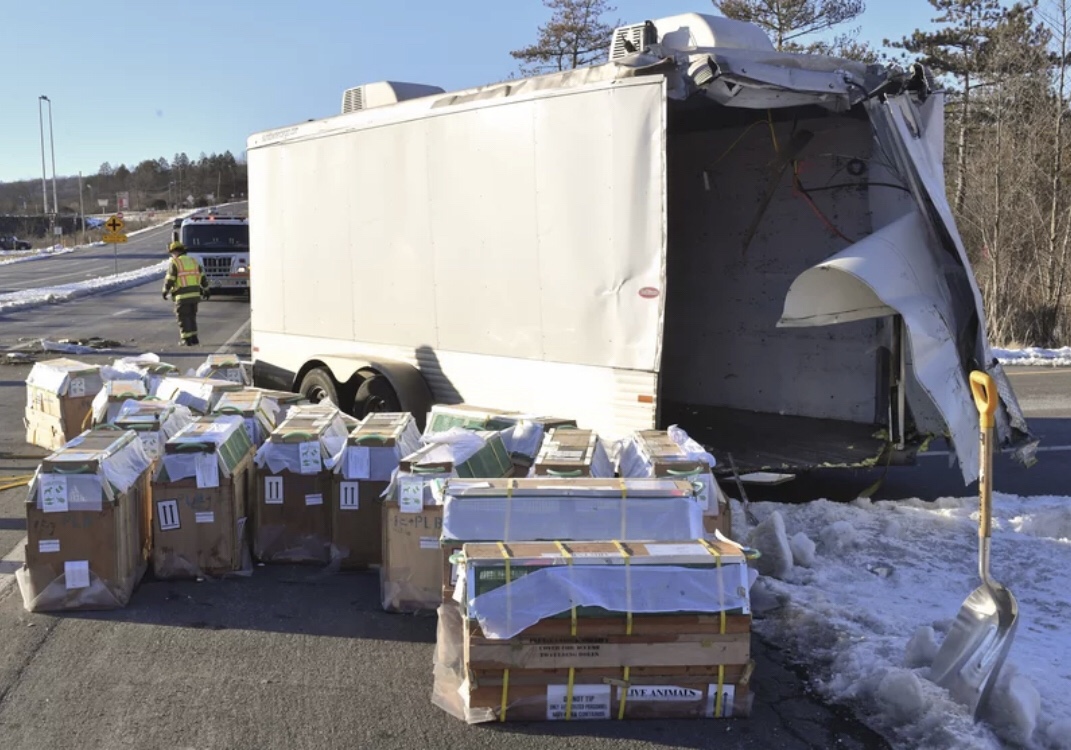
Isn't it a little odd to be transporting research monkeys, on their way to a quarantine facility -- in an unmarked truck driven by a private contractor? This is the CDC we're talking about here, they don't have their own people to move these animals around? If there was any concern as to any illnesses the monkeys might have, wouldn't the trailer need to be marked? In other words, if the CDC is moving around a potential biohazard, don't they have the responsibility to make sure that these animals are transported in the safest way possible?
The CDC isn't looking too good right now. The monkeys were going to a CDC-approved quarantine facility. The CDC approved moving potential biohazards in a standard trailer pulled by an unmarked truck. Their "approval" doesn't meet the highest standards.
A few days later, the woman that was in contact with the monkeys is now showing symptoms.
Danville, PA – Michelle Fallon is living a nightmare. And, she’s ready to put that nightmare on record.
The Danville woman is now experiencing symptoms, believed to be related to her close encounter with wild monkeys, when the trailer they were riding in collided with a dump truck and unloaded their cages all over Route 54, close to I-80, on Friday afternoon. (The monkeys were destined for an unidentified Centers for Disease Control lab, in the Midwest.)
The following day, Fallon developed a cough and something that resembled “pink-eye.” And, by Sunday, she was visiting the Geisinger Medical Center emergency room, where infectious disease doctors were consulted. Fallon has since received her first (of 4) preventative rabies shots; as well as a prescription for a 14-day course of Valacyclovir.
The stay-at-home mom, who shared that she was fully vaccinated and received her booster, was also tested for Covid, but the results at the ER were negative.
Then there's the issue with the driver.
The driver of the truck hauling the monkeys, identified in a press release from PA State Police, as Cody M. Brooks, 31, of Keystone Heights, FL even went so far as to put his hand in the camera of a local Press-Enterprise reporter. “He was very, very upset,” said Fallon. “He was in a panic.” Brooks passenger, Daniel G. Adkins, 59, of Florahome, FL required transport to Geisinger Medical Center for an injury.
Michelle Fallon is experiencing symptoms, and they have put her on antiviral drugs, they obviously think that she might have caught something.
There's no telling what's really going on here, but whatever it is, it has exposed a serious problem. The CDC is not competent enough to be performing these types of transports. That being the case, are they competent to be performing the experiments either?
The CDC is supposed to be the Gold Standard when it comes to to infectious diseases. The CDC is funded by the most wealthy country on the planet, and this is how they conduct business?
What do you think?

Please leave a comment, like it or hate it... You DO NOT need to register to leave a comment. Email addresses are NOT used. Just make one up "someone@somehost.com"
 XML Feeds