| « The Movie "Citizen Vigilante" Is Part of A Psyop (Psychological Operation) | Quick Follow-up to "Why Are Nearly ALL Conservative Pundits Quiet About This?" » |
Islam Is The Quintessential Tool Necessitating The Digital Panopticon
 06/21/26 18:36, by OGRE, Categories: Welcome, News, Background, History, Politics, Illegal Immigration, Strange_News, U.S. Economy, Elections
 Islam is incompatible with Western civilization(s)
How can I make this claim?
Because Islamic leaders have already made the claim too many times to list here. Those Islamic leaders don’t talk about moving to the West to settle [under Western laws], they talk about moving to the West to instate Islamic Law -- to conquer. What most people don’t understand is that traditional Islamic beliefs are that Muslims can’t permanently live in the dār al-Kufr (land of disbelief).
The fact that there are countless books written in an attempt to reconcile the differences between Islam and the West are proof enough that there are serious compatibility issues.
More recently, Muslim political groups have referred to hijra in other ways. To give just a few examples: (1) in opposition to colonial rule; (2) those leaving Russia and the Balkan states in the 1800s; (3) Indian Muslims moving from British-controlled India to Afghanistan in the 1920s; (4) Muslims emigrating from India to the newly created state of Pakistan. These follow a pattern in that they all discuss whether Muslims were obliged to leave areas ruled by “infidels” (Muslims in medieval Christian Spain, colonialized areas, Russia and the Balkans, India towards Afghanistan or India towards Pakistan, etc.) and if so, under what conditions. These discussions were very closely related to issues of jihad.
In addition, post-World War II Muslim migration to Europe was of great historical importance, as it formed the basis of a fundamental change of concepts in Islamic normative thought. It developed what became known as a reverse hijra, that is, an unprecedented number of Muslims emigrating voluntarily from Muslim lands to non-Muslim countries. After the Second World War, with the introduction of the United Nations and the formation of Muslim minority communities in Western Europe, Muslim political, legal and religious scholars reached a new interpretation of the peaceful relations between the Muslim and non-Muslim world, rejecting the traditional dichotomy of dār al-Islām (abode or land of Islam) and dār al-Kufr (abode or land of disbelief) as anachronistic. This paved the way for an Islamic acceptance for residence, naturalisation and citizenship of Muslims in non-Muslim nation states under certain conditions (such as freedom of religion).
This acceptance became the basis for a new branch of Islamic Law that was developed in the 1990s and 2000s, namely fiqh al-aqalliyyāt. In less than two decades, fiqh al-aqalliyyāt shifted the legal discourse from fiqh al-hijra to fiqh al-muwāṭana, the Islamic law of citizenship. However, this does not mean that citizenship, nationality and integration of more than 15 million Muslims in the European Union was accepted by Muslim scholars overall. There are still certain countries, circles and traditions where this is rejected and where Europe [and the US] continues to be seen as part of dār al-Kufr. The process of re-interpretation of Islamic thought concerning this vital political issue has not yet been completed. These circles normally allowed Muslim residence in other parts of the
world for specific, temporary reasons, but not for the purpose of settling (Ramadan
1999; Aldeeb Abu-Sahlieh 1996).
It’s not that Muslims don’t want to live in the West and enjoy the materialist advantages the West offers -- it’s that they are not to do so permanently.
As a result, what must Muslims do once they migrate to a new Western country?
Either they migrate there temporarily, or they decide to stay and begin work on the Islamization of that society.
There is no other option for Muslims. Either they live in the dār al-Islām (abode or land of Islam) or they temporarily live in the dār al-Kufr (abode or land of disbelief).
This is not a new problem for the West. In fact there have been many Islamic scholars who have tried to reconcile these differences.
Here is the opening to the book I linked to. These scholars are not arguing that Islam should exist side-by-side with Western civilizations, but that they should offer an alternative to Western civilization. Eventually replacing Western civilization, as it is required.
A principle concern of the authors in this collection of papers is how Islamic ethical and legal traditions can contribute to current global debates on the dilemmas of migration and displacement. Can the Muslim tradition provide an alternative international moral and legal paradigm where others have proven inadequate? Abou El Fadl, in this volume, argues that the Muslim tradition is replete with “powerful virtuous ethical impulses that could make substantive contributions to the field of forced migrants and displacement.” The ethics of muʾākhā (brotherhood), ḍiyāfa (hospitality), ijāra (providing protection and support), amān (providing safety), jiwār (neighborliness), sutra (protection, esp. in case of marriage), kafala (to guarantee someone) among others, may provide common ethical grounds with other religious traditions, moral philosophies and social customs that can go beyond the technical applications and procedural standards of international law. The argument that these moral principles or “ethical potentialities and trajectories” are only entitled to fellow Muslims and not applicable to non-Muslims, contradicts the general historical trajectories and normative understanding in Islam. These ethics, according to the authors of this volume, are inclusive and not context-specific. They present “a normative imperative for Muslims that would apply whenever there is an obligation to escape oppression or injustice,” and represent “purposeful construction of social and political virtues” (Abou El Fadl, Chapter One).
Unfortunately, post-colonial Muslim scholars have been more occupied with the apologetic discourse of either reinterpreting classical concepts (such as the division of the world into dār al-Islām and dār al-ḥarb) to relate to the political conceptualization of contemporary nation states, or proving an essential compatibility and reconcilability between Islamic theology and international law. The better task is to turn the moral imperatives inherited from the Islamic tradition into significant theological and ethical engagements with modern discourses on human rights and dignity.
This volume provides scholarly attempts to achieve this task by reviewing questions of migration, residence, naturalisation and citizenship from multisided perspectives, thus more broadly defining the Islamic tradition to cover not only theology but to also encompass ethics, customs and social norms, as well as modern political, humanitarian and rights discourses.
The works of these Islamic scholars are openly admitting that there are irreconcilable differences between the West and Islamic culture. The last sentence (the part I highlighted), says it plainly.
Let’s break it down.
...thus more broadly defining the Islamic tradition to cover not only theology but to also encompass ethics, customs and social norms, as well as modern political, humanitarian and rights discourses.
These are the areas that Islamic tradition are to cover in any society.
- Theology
- Ethics
- Customs
- Social norms
- Politics
- Humanitarian [issues]
- Rights discourses (notice they are not ‘individual’ rights)
Considering how comprehensive this list is, what’s left?
LAW. That’s what’s left (out), and that’s a large part of why it’s not mentioned in this list.
Islamic scholars often write this way. They wax on about the virtues of Islam -- but they almost always seem to gloss over Islamic Law -- because that’s where you determine how those virtues are to be applied and to whom they apply.
Islamic scholars always couch Islamic Law as part of Islamic ethical and legal traditions. This is an attempt to make it sound not like a law, and that Islamic Law is really just a “tradition.” When functionally nothing could be further from the truth.
It’s the Christian equivalent of saying that the Ten Commandments are really just tradition. However, most of modern Western law is based on the Ten Commandments, so the tradition argument becomes rather silly.
The same thing applies to Islamic Law. Islamic Law is the foundation from which Islamic traditions are effectively applied.
The War on Terror and The Patriot Act
Remember the phrase [The US military will] "Fight them over there, so you don’t have to fight them here."
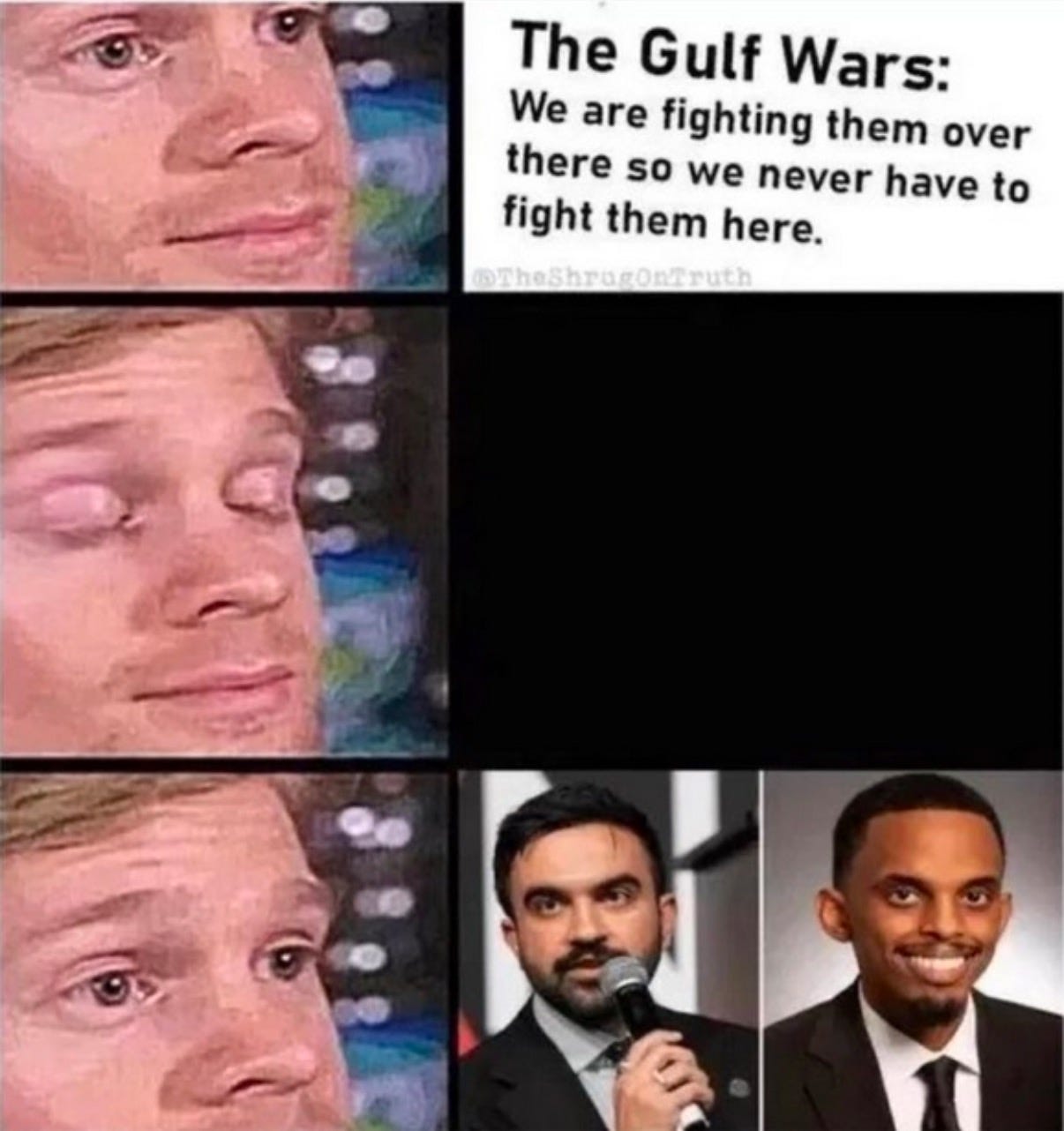
The September 11 attacks changed things, for a few years.
Islam was the driving force behind terrorism in the US, and by extension, the reason for the massive domestic spy program known as The Patriot Act.
“See terrorists are already here, and so we need a way to catch these people -- that we already know are here.” - Neocons
You can’t get the public behind a massive program to stomp on their rights -- unless you have a compelling argument that it will better their lives somehow. In this case, it was said that the domestic spying program would stop future terror attacks.
Safety was dangled out there, and far too many people chose safety over freedom.
The idea that any government is going to setup a giant spy program, but never use it for nefarious purposes, is dangerously naive. Love him or hate him, just ask Trump about The Patriot Act and domestic spying.
The Patriot Act was 100% always about domestic spying -- because when the government wants to control the entire population, you need to know who will go along, and who won’t. There is no other reason for such a system.
Edward Snowden broke that story to the world, and is still sought after for criminal charges in the US -- for letting people know the truth behind the lies.
Why facilitate the migration of Muslims to the West
Does anyone really believe that this will result in a good outcome, when there is obviously no historical reason to believe so?
The answer to that question is rather simple.
No.
Nobody expects that this will work out well. That’s how you know that this migration effort is part of something entirely different.
The obvious answer was to not allow incompatible people into the United States as refugees. But this was done anyway.
Why?
Because a level of chaos is needed to enact change. Keep in mind that all the while, this is being facilitated by the US government, by our “elected” officials.
Pushing two or more incompatible groups together will ultimately result in disagreements that will rise to the level of requiring some kind of government-level intervention.
We’re seeing this happen right now in the UK. The number of incompatible cultures that have been thrown together is reaching the boiling point. The people of the UK are demanding that their government do something about it, and of course the government is doing nothing about it -- yet.
Don’t make the assumption that this is because the authorities are weak, or because they lack the will to do something about it.
This is being allowed to happen on purpose.
Consider all of the strange things that have happened in just the last few years in the UK. They are jailing more people for speech violations in the UK than Russia. They are refusing to uphold UK law when migrant(s) are involved. Again -- not by accident. These actions are designed to provoke a response.
The UK government is poking and prodding the population into action. Once it becomes a very serious problem, open fighting in the streets, and general mayhem, how do you think the government is going to respond?
Are they going to favor the indigenous population -- or are they going to lump everyone together (migrants and citizens) and treat the entire group as one?
I think the answer is obvious.
Whatever happens as a result will require everyone in that country to abide by new “emergency” laws. What exactly that might entail, your guess is as good as mine, but I know one thing. I don’t want to be there when that goes down.
Where does this all lead
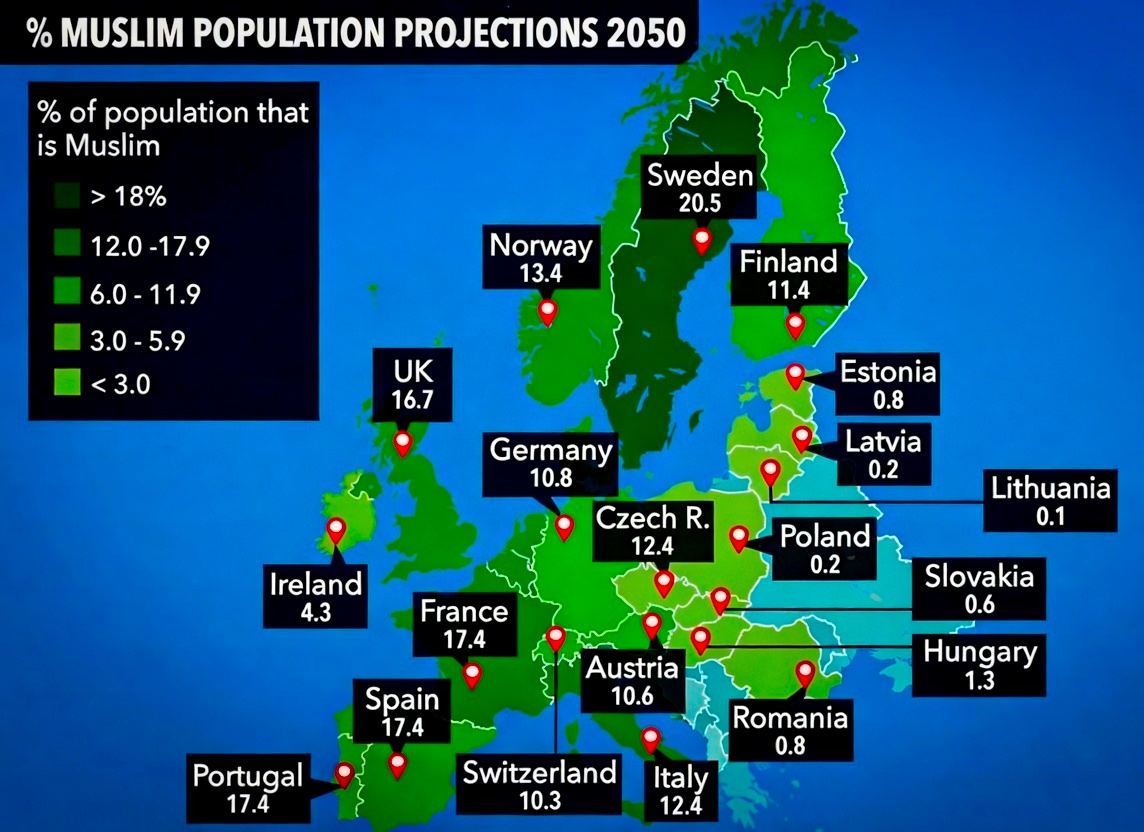
Knowing that this obviously ends badly -- at least for everyday people -- what could possibly be the point of all this?
I think the answer is simple.
You can’t create a kind of (1984-style Fabian Society) control structure with Western civilization intact. The US Constitution was written to limit the power of government. The US Constitution is the greatest obstacle to those who wish for absolute control.
Europe will be a much easier win for the controllers.
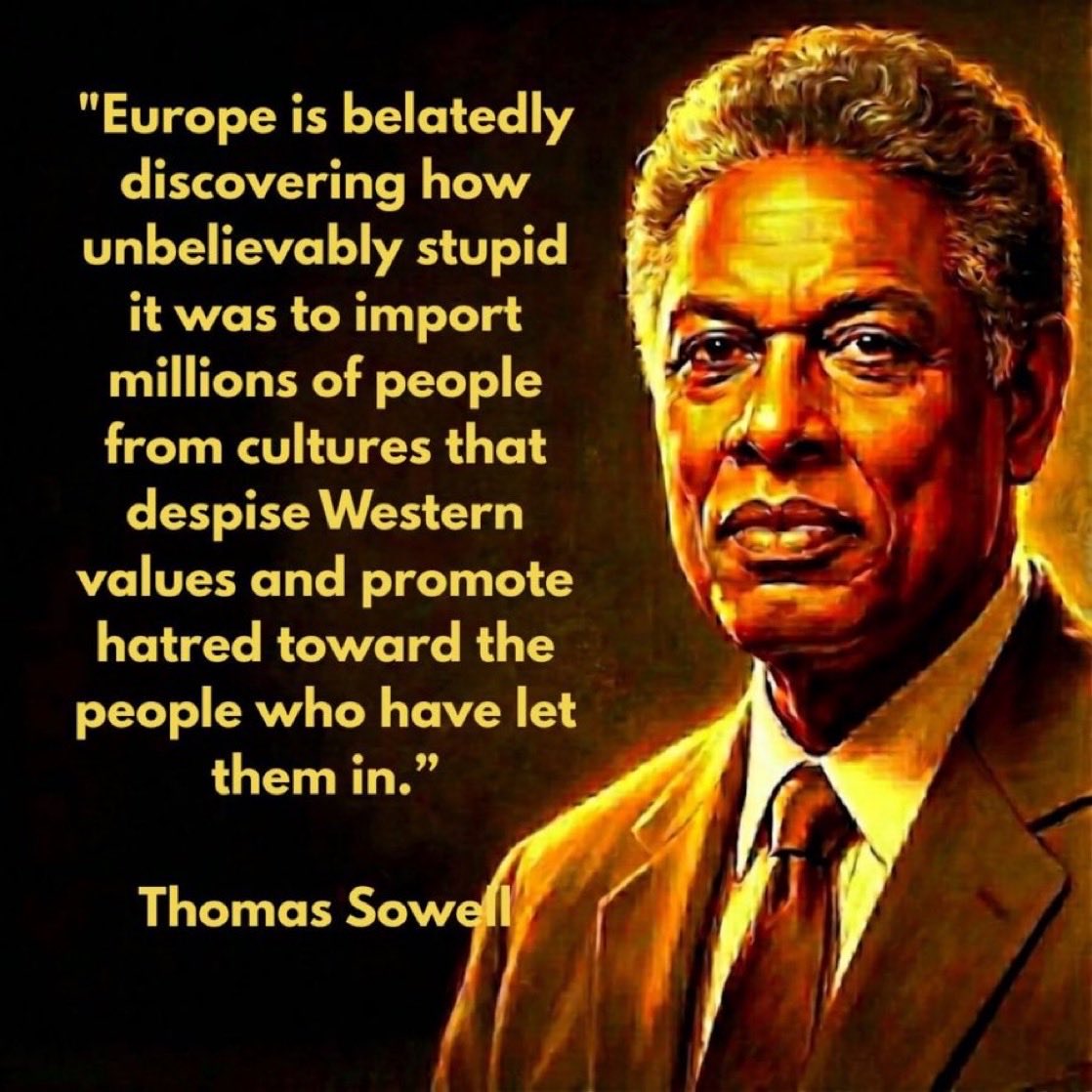
Western civilization must be replaced with something that is more compatible with absolute (and centralized) control.
One might argue communism, or socialism could offer that level of control, but it hasn’t historically.
Communism and socialism’s main failing point is that the entire premise of both (at least for those outside the system) was always a lie.
It’s not long before everyone knows what’s really going on, it is just easier to lie and keep on living, than to push back against the system, and likely be killed or watch your family be tortured and killed.
In comes Islam
Islam takes care of all attributes of the control structure inherently -- and it wraps it up under the guise of a religion.
As a result you have “true believers” not like with communism and socialism where everyone always knew (even if deep-down) that something was off.
Islam creates true hardcore believers.
Once there is an Islamic majority, there is no more need for “conversion.” Muslims are tolerant when they must be, once they have the majority there is almost zero tolerance. The phase where Muslims try to convince people to convert to Islam -- is in the beginning stages -- before there is an Islamic majority. That's why so many in the West fail to see what's happening.
Once a country is majority Muslim, it’s not likely to ever turn back. Not without some kind of civil war or revolution.
- Spain and Portugal
- Philippines
- Mozambique
- Malta and Sicily
- Greece
- Serbia
- Bulgaria
- Romania
It is my personal opinion that those who wish for total control, don’t care about religion in any way, and simply want a compliant lower class of people to rule over -- and the easiest way to do that is to allow Islam to profligate, then tighten the reigns.
Islam is being used in the West to accelerate or otherwise bring on the downfall of Western civilization -- because Western civilization is the only thing holding the controllers at bay.
Tell me what you think in the comments.
If you enjoy my writing, you could buy me a Ko-Fi 😉👉

Please leave a comment, like it or hate it... You DO NOT need to register to leave a comment. Email addresses are NOT used. Just make one up "someone@somehost.com"
No feedback yet
 Comment feed for this post
Leave a comment