| A Quick Rundown of The Government Fraud Cycle » |
Samsung Washing Machine Repair

Life can stop abruptly when your washing machine goes down.
I don't know about most people, but I don't schedule my clothes washing. I wash my clothes when I'm almost out of clothes.
Thankfully, I just washed my clothes, but my wife was washing a comforter. She noticed that the washing machine had been running for a long time. So, I went to investigate.
The very first thing I noticed was the smell of hot varnish, like when an electric motor is hot, or brand new. This washing machine is not brand new, so that means that the motor must be very hot.
It was in the rinse cycle with the drain pump running, but I noticed that when the drain pump stopped, the drum never spun up. I immediately shut it off.
I disconnected everything and wheeled it outside to check it out. I took a peek and found that the motor was super hot to the touch, but everything could spin freely. I saw a large capacitor mounted underneath by the motor. That was a good thing, because it meant that the motor was just a regular PSC (Permanent Split Capacitor) motor. PSC motors are single phase AC motors that can be run in either direction.
Normally when there is an issue with a failed capacitor, the motor won't spin, and will just sit and get hot. It will be pulling full lock rotor amperage (which is not good for the motor) but thermal protection usually keeps them from burning out.
A quick history moment. Motor run capacitors fail more frequently now (usually around 5-years). The older capacitors used heavier metal film, and were generally more heat resistant.
Based on what I smelled, the motor run capacitor was my prime suspect. I made sure that the capacitor was discharged and removed it for testing. It was rated for 250VAC 45uF (microfarad) with an AFC (Available Fault Current) rating of 10,000 Amps. So, I went to test it. However, I found that my DVOM (multi meter) doesn't go up to 45uF, it only goes up to 20uF.
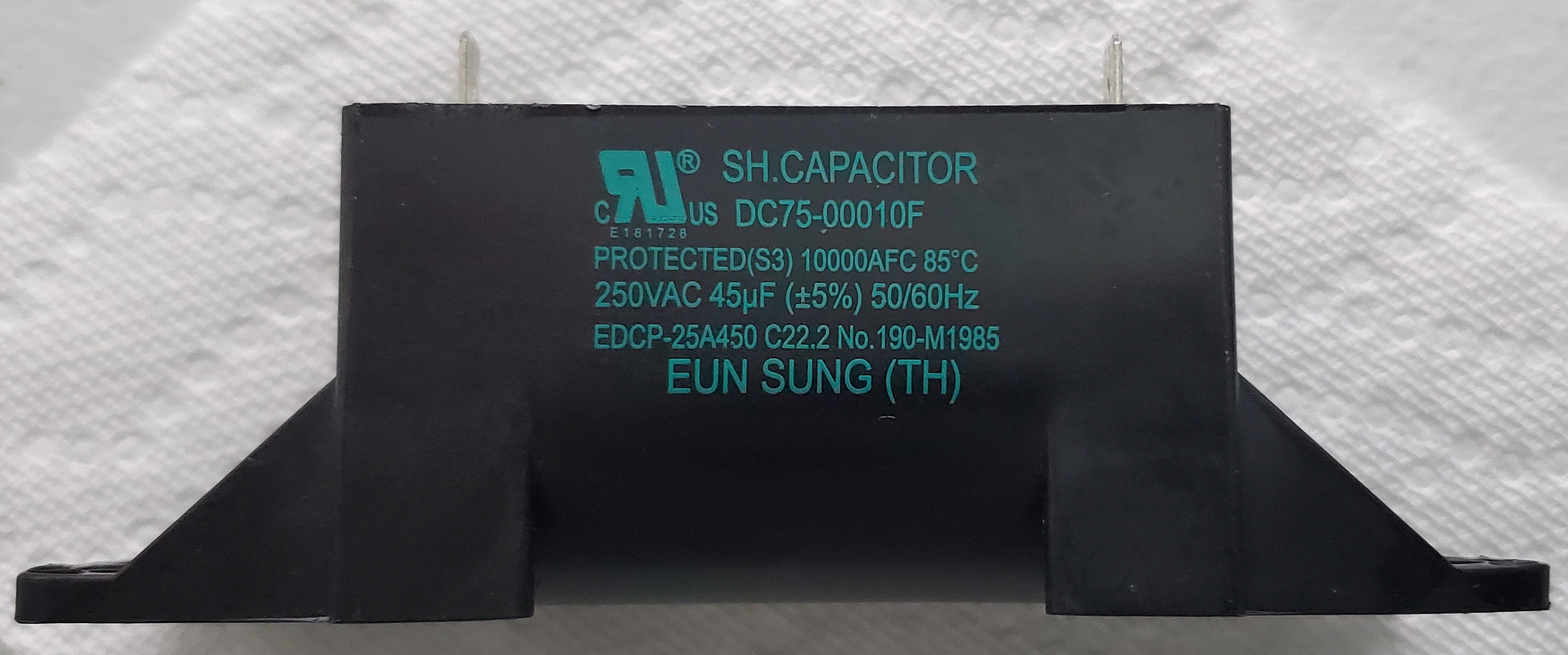
It has four mounting holes, but only used two of the four.
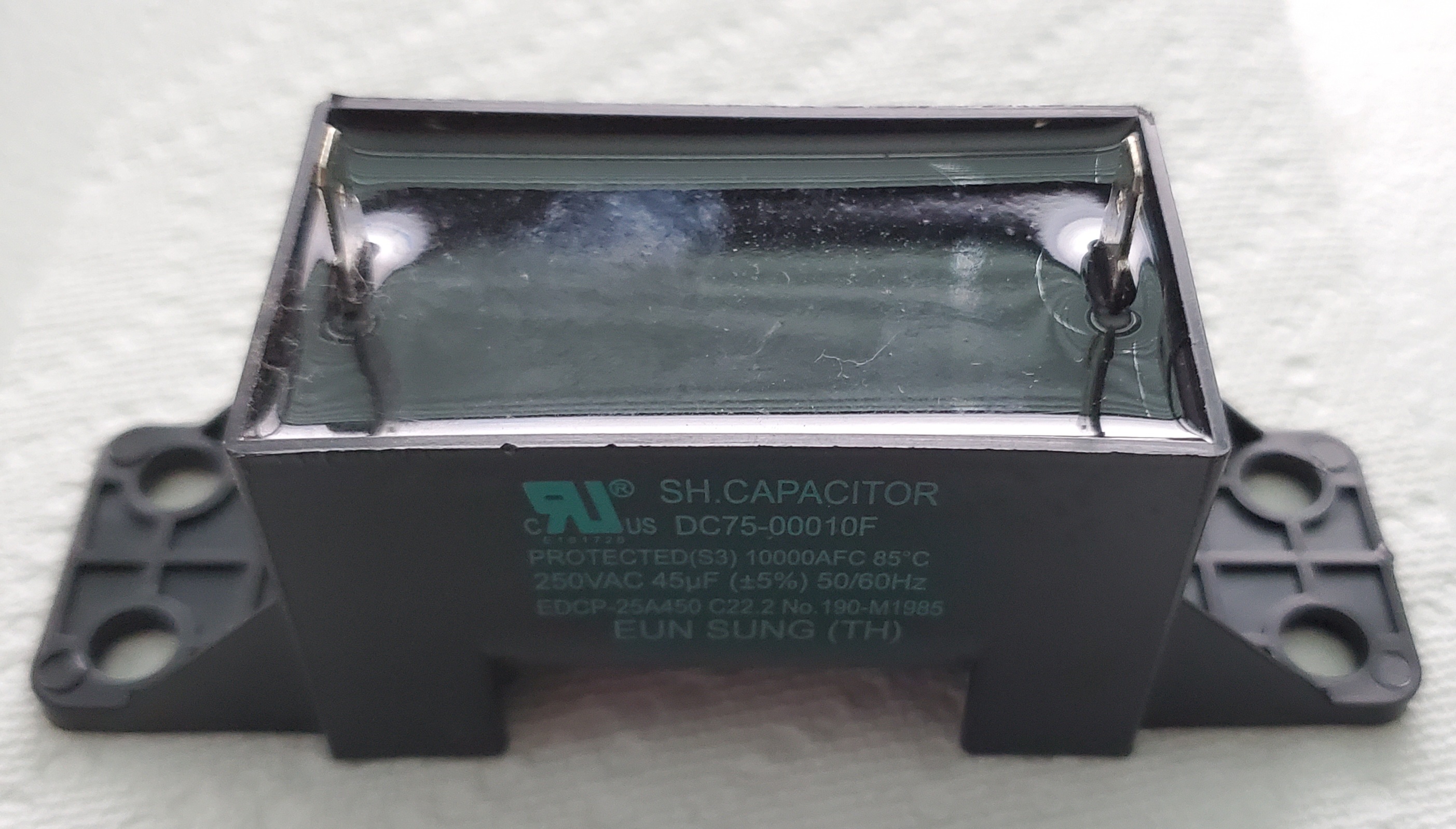
I went online to price a capacitor and found that the price ranged from $12, for a matching rating, to around $145 for a direct replacement on Amazon.
When you buy replacement parts (for an appliance specifically) they usually mark up the prices to insane amounts. I didn't want to wait, and didn't want to overpay, so I found a workaround.
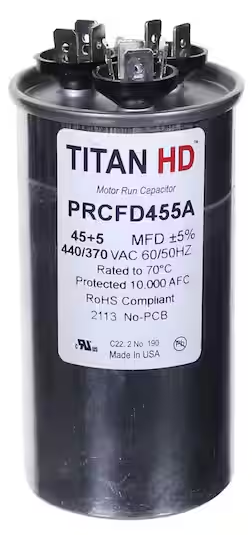
The capacitance rating of 45uF is actually quite common. In fact, my home AC unit uses a dual capacitor, the pin for the compressor is 45uF the one for the fan is 5mF. I usually have those on-hand, but this time I did not. So, I looked them up on Home Depot's website. They sell a combo cap that's 45uF plus 5uF 440/370 volts, with an AFC rating of 10,000 Amps for only around $25. I don't need the 5uF pin, so I just taped it off (with electric tape).
With capacitors, using one with a higher voltage rating is completely fine. The voltage rating basically represents the voltage at which the capacitor's internal materials will break down, causing catastrophic failure (internal arching). So, using a higher value voltage rating is not an issue, it's the capacitance rating that's most important.
The only problem was how to mount it. I used two one-hole nylon cable straps, and two Zip Ties to hold it in, reusing the screws that held the original capacitor.
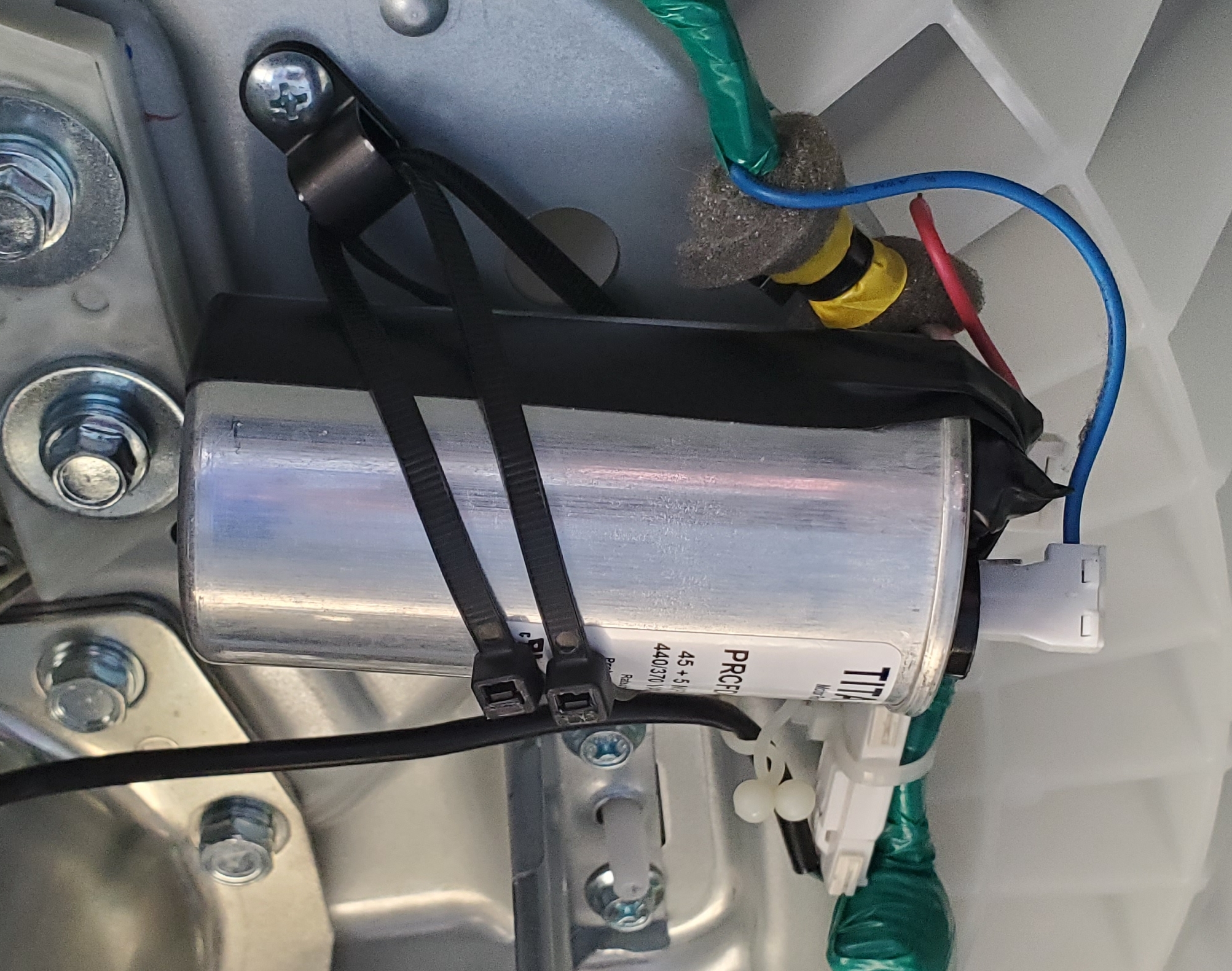
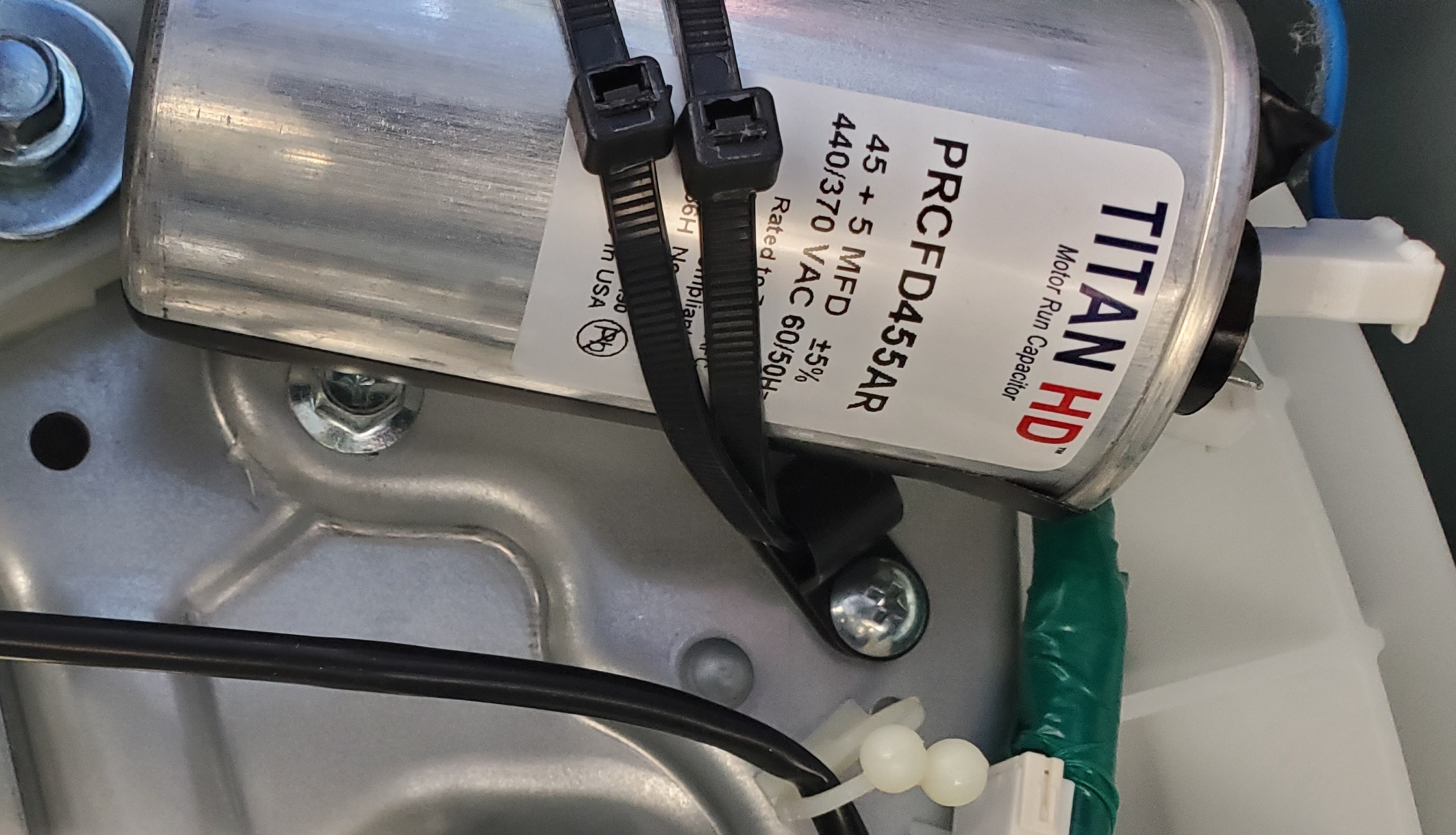
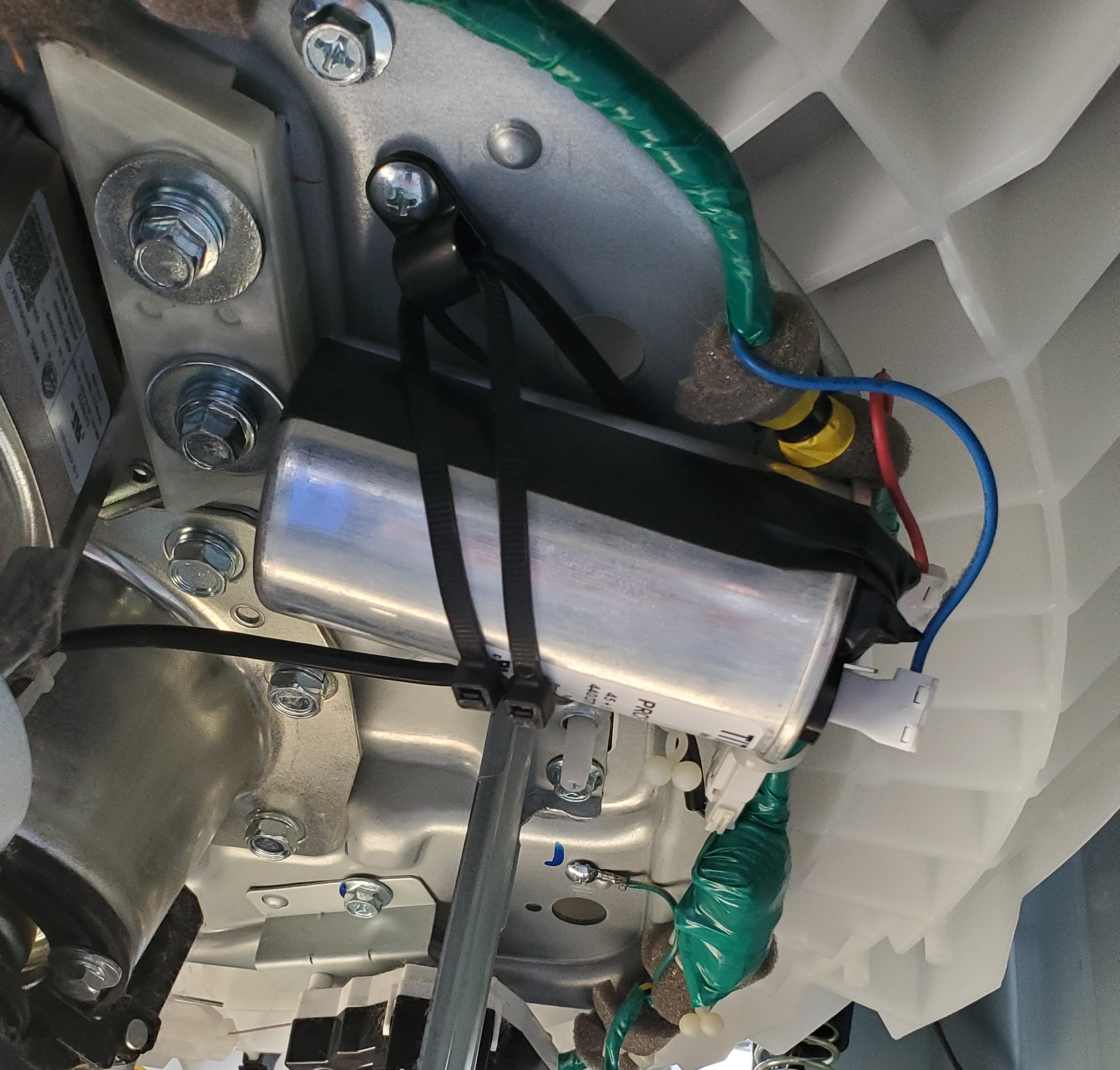
So far so good. It's been a few months now, and the washing machine is going strong.
The new capacitor should be good for a few years at least. It should have better heat dissipation than the original one, and will likely last longer.
Tell me what you think, or if this might help you out.
If you enjoy my writing, you could buy me a Ko-Fi 😉👉

Please leave a comment, like it or hate it... You DO NOT need to register to leave a comment. Email addresses are NOT used. Just make one up "someone@somehost.com"
No feedback yet
 Comment feed for this post
Leave a comment